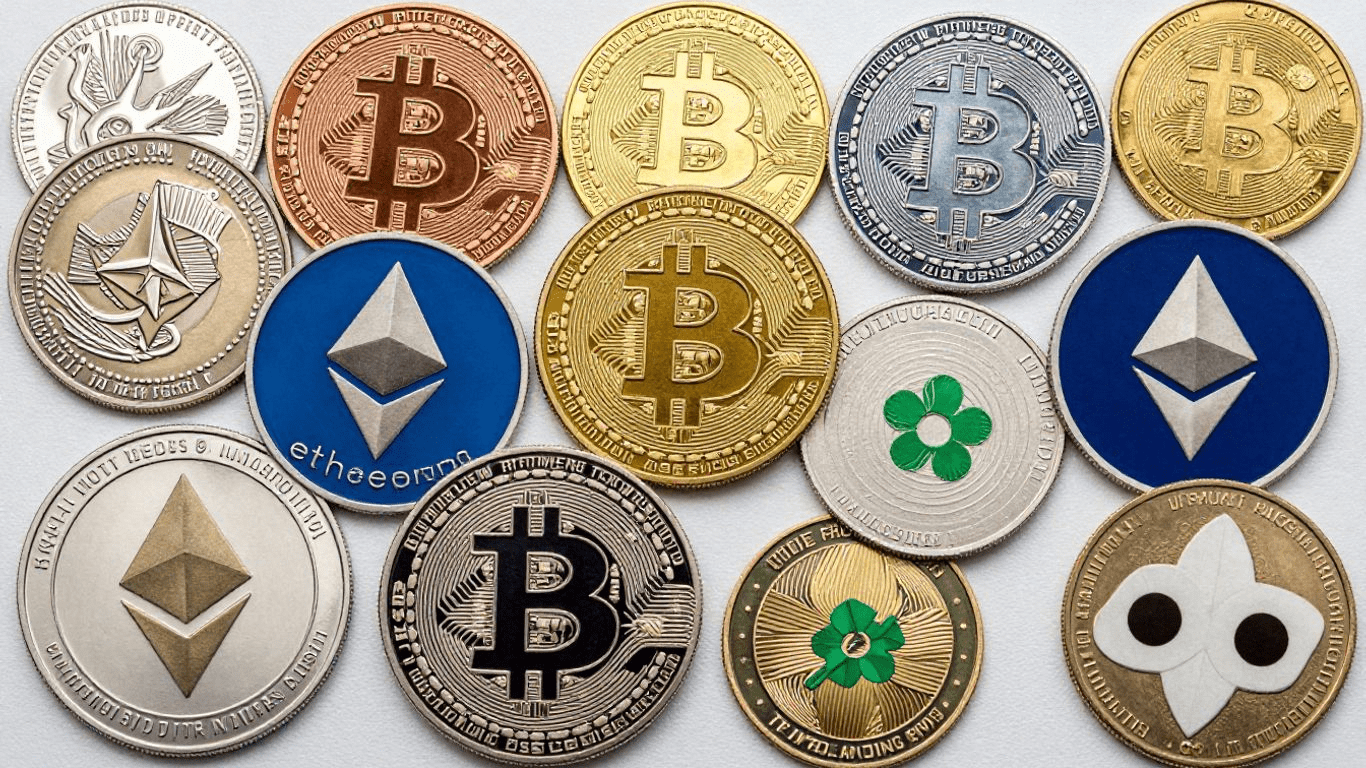
One brutal 50% crash can wipe out months — even years — of crypto gains in days.
Most investors think they’re diversified… until the market proves them wrong.
Here’s how to diversify your Crypto Portfolio BEFORE the Next 50% Drop and protect your upside while limiting painful downside risk. We all know that the crypto market can be a wild ride. One minute things are looking up, and the next, it feels like everything’s going sideways. That’s why having a solid portfolio strategy is super important. We’re not just talking about buying a bunch of different coins; it’s about picking the right ones that balance risk and reward.
Key Takeaways
- Keep crypto investments to a small part of your overall money – think 5-10% max.
- Build a strong base with Bitcoin and Ethereum, making up about 40-60% of your crypto holdings.
- Add mid-sized altcoins like Solana and XRP, aiming for 25-35%.
- Consider smaller, newer projects or specific sectors for about 10-20% of your portfolio.
1. Bitcoin
When we talk about putting together a balanced crypto portfolio, it really makes sense to start with Bitcoin. There’s a reason so many investors see it as the bedrock for digital assets. Bitcoin’s track record for resilience and steady demand helps anchor our portfolios even when the wider market feels wild.
Let’s get real about why Bitcoin stands out:
- It’s got the highest market cap, topping $95,000–$96,000 per coin in early 2026, reaching new peaks and bouncing back again and again.
- Many see it as digital gold—not because it’s shiny, but because it often moves differently compared to traditional stocks and bonds, so it can add some stability.
- Big money is involved—institutional investors now hold billions in Bitcoin for the long haul.
So, how do we fit Bitcoin into our strategy for real diversification? It’s not about going all-in, but about careful sizing. For many of us, a small but steady allocation—maybe around 5% of our portfolio—is enough to make a difference. If we’ve got Bitcoin, we lower the odds of a single coin sinkhole dragging us down, and still leave room for growth with other assets, like the many alternatives portfolio management experts recommend.
2. Ethereum
When we think about building a strong crypto portfolio, Ethereum always comes up next to Bitcoin—there’s no getting around it. Ethereum is more than just a coin. It’s the backbone for thousands of decentralized applications, smart contracts, and the biggest web3 projects out there. Having Ethereum means we’re not just investing in an asset, but also in the technology that powers much of the Blockchain world.
Let’s break down why Ethereum plays such a big part in diversification:
- Supports smart contracts, DeFi, and NFTs, unlike Bitcoin
- Huge developer activity keeps the ecosystem growing
- Regular network upgrades (like recent staking or speed improvements) help maintain its relevance
Ethereum is more volatile than Bitcoin but has serious upside if smart contract adoption keeps increasing. That’s why, when we’re balancing risk and potential growth, keeping a fair portion of our portfolio in ETH just makes sense.
If we want to capture future innovations in Blockchain—think DeFi, tokenization, and web3—Ethereum is where a lot of that action is happening.
3. Solana

Solana has kept our attention for good reason—it stands out as one of the fastest and most cost-effective Blockchain available now. While Ethereum gets most of the press, Solana’s ability to process thousands of transactions per second, often with fees as low as a fraction of a cent, gives us a real edge when looking for growth beyond the big two (Bitcoin and Ethereum).
Let’s break down why including Solana can make sense when we diversify our crypto:
- Lower transaction fees: We can move assets or interact with apps without worrying much about high transaction costs eating into our gains.
- New Upgrades: The upcoming Alpenglow update is expected to push block finality down to around 100–150 milliseconds, making things even faster and helping projects scale up quickly.
- Institutional Interest: ETF applications for Solana are in the pipeline, which could mean more big-money players entering the scene and potentially boosting demand.
- Application Diversity: Solana powers everything from art markets to lending platforms, which gives our portfolio more variety and less risk tied to a single sector.
Solana isn’t without risk—it’s had network hiccups in the past—but when we take a small, measured position, it lets us benefit from rapid development and gives our crypto portfolio a bit more balance.
4. XRP
When we talk about adding some true variety to a crypto portfolio, XRP often stands out as a smart contender. Unlike Bitcoin, Ethereum, or Solana, XRP has shown a pattern of moving a bit differently from the rest of the pack. This lower correlation can actually help us spread out risk, which is a big deal when almost every other coin seems glued to Bitcoin’s wild swings.
One thing that makes XRP unique is its role in cross-border payments. Banks and payment providers use it to transfer money quickly and at low cost. So, as adoption in traditional finance grows, so could XRP’s usefulness. It’s also been in the headlines lately thanks to strong demand from new U.S.-listed spot XRP ETFs and tighter regulations starting to clear up in the States.
Let’s break down a few reasons why we might want to keep XRP on our diversification radar:
- Distinct use case focused on fast, global money transfers.
- Lower correlation with Bitcoin and Ethereum, which means it tends to zig when they zag.
- Gaining popularity among institutions, especially after spot ETF launches.
- XRP trades in a price range of $2.15 to $2.40 (as of early 2026), showing increased stability compared to some smaller coins.
No single coin is a magic bullet. By giving XRP a spot in our crypto mix, we add a layer of defense against those moments when the bigger coins all move together.
5. Cardano

Cardano, often abbreviated as ADA, takes a different path than many other cryptocurrencies. Instead of rushing features to market, its development is very methodical and research-driven. Think of it like building a house with a really solid foundation and detailed blueprints before even thinking about the paint color. This approach means it might take longer for new features to roll out, but the goal is to create a more secure and sustainable Blockchain.
When considering Cardano for your portfolio, it’s helpful to look at its unique value propositions. Its focus on a layered architecture and its proof-of-stake consensus mechanism are designed for long-term scalability and energy efficiency. This methodical development means we should look at its potential impact within broader investment portfolio strategies.
Here’s a quick look at how Cardano fits into a diversified strategy:
- Core Foundation: While Bitcoin and Ethereum often form the largest part of a portfolio, Cardano can be a significant part of the altcoin allocation.
- Research-Driven Growth: Its development roadmap, though sometimes slow, is transparent and based on academic principles, offering a different kind of potential growth.
- Ecosystem Development: Keep an eye on the growth of decentralized applications (dApps) and projects building on Cardano, as this is key to its long-term success.
For those interested in the long-term potential and a different approach to Blockchain technology, Cardano is definitely worth a closer look as part of your overall crypto strategy. You can explore more about Cardano’s price prediction and how it fits into various investment plans.
6. USDT
Alright, let’s talk about USDT, also known as Tether. When we’re building out our crypto portfolios, stablecoins like USDT play a really important role. Think of them as the steady hands in a sometimes wild market. Their main job is to stay pegged to a stable asset, usually the US dollar, which means one USDT is supposed to be worth one US dollar. This stability is super helpful.
Why do we even bother with stablecoins in a crypto portfolio? Well, they offer a safe haven. If things get really choppy with other cryptocurrencies, we can move our funds into USDT to protect our capital from big swings. It also makes it easier to get back into the market when we see a good opportunity.
Here’s a quick look at why USDT is a common choice:
- Price Stability: Aims to maintain a 1:1 peg with the US dollar.
- Liquidity: It’s one of the most widely traded stablecoins, meaning it’s easy to buy and sell.
- Exchange Integration: Accepted on almost every crypto exchange.
- DeFi Use: Used in various decentralized finance applications for lending and borrowing.
It’s worth noting that while USDT aims for stability, like all cryptocurrencies, it’s not entirely without risk. We should always do our own research into the reserves and audits. For us, it’s about having a reliable tool for managing risk and facilitating trades within our crypto holdings. It’s a key piece for managing portfolio risk.
Putting It All Together: Your Diversified Crypto Journey
So, we’ve walked through how to spread your crypto investments around. It’s not about grabbing every new coin that pops up; that’s usually a fast track to trouble. Instead, we’ve learned to build a solid base with things like Bitcoin and Ethereum, then add in other promising projects from different areas, always keeping a bit aside in stablecoins. Remember, this isn’t a get-rich-quick scheme. It takes time, a bit of research, and sticking to a plan, especially when the market gets wild. By diversifying smart, we’re setting ourselves up to handle the ups and downs better and hopefully grow our crypto holdings steadily over the long haul.