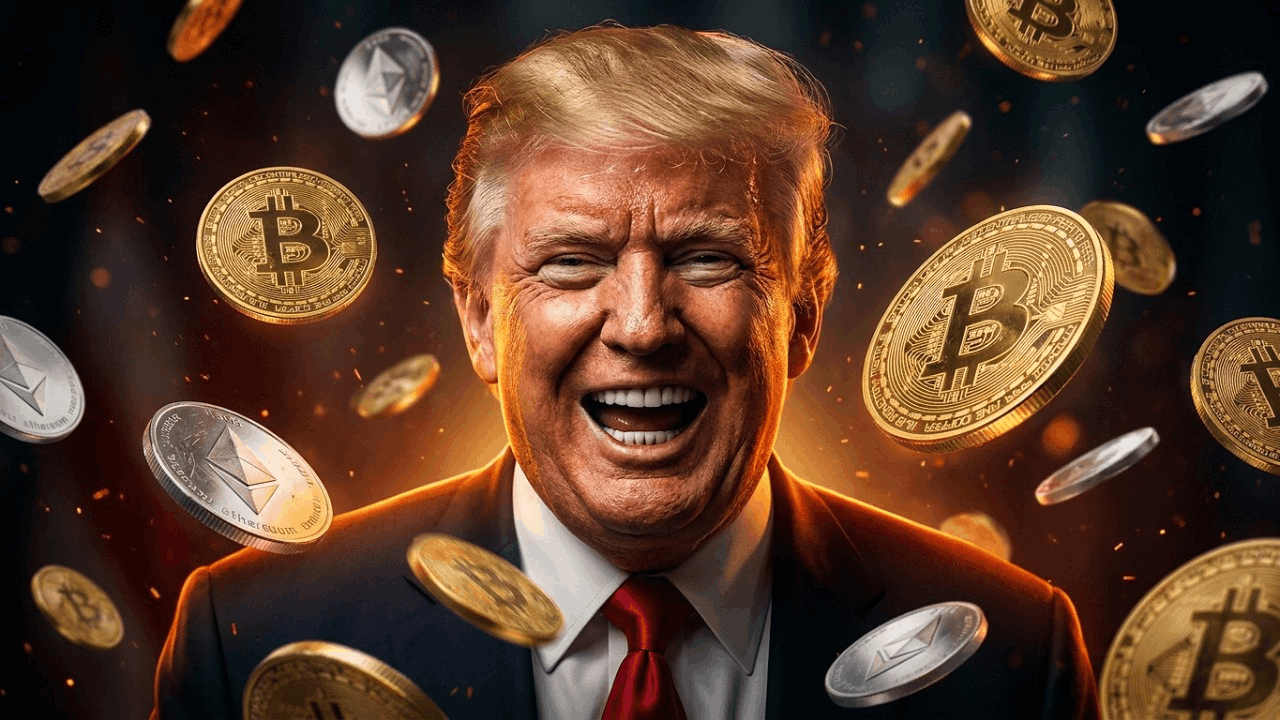
Donald Trump’s net worth shot up from $2.3 billion to over $6 billion in about 16 months. That is a near tripling of wealth in a very short time. Most of this growth did not come from real estate or old businesses. According to data from Forbes and Bloomberg, about $3 billion of that increase comes from cryptocurrency. This sudden wealth jump happens while the Department of Justice and several senators raise red flags about how the money is being made.
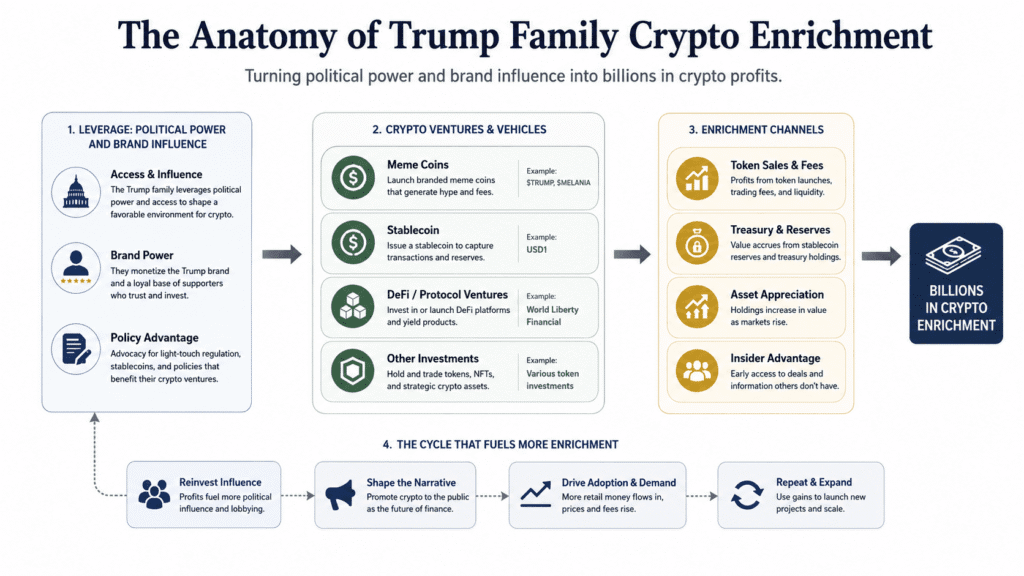
The Anatomy of Trump Family Crypto Enrichment
Net Worth Tripled: Quantifying the Crypto Delta
The numbers are stark. Trump went from $2.3 billion to over $6 billion almost overnight. According to a Bloomberg investigation, digital assets added $1.4 billion to the Trump family’s wealth over the past year, making up about one-fifth of their total fortune for the very first time — a seismic shift from the golf courses and real estate deals that once defined the Trump brand. This is a massive shift compared to his first term in office, where his net worth stayed mostly flat. Analysis from Forbes and Bloomberg shows that crypto is the primary driver of this $3 billion delta. It is a level of financial velocity that rarely happens in traditional markets.
Decoding the WLFI Structure and Revenue Flow
World Liberty Financial, or WLFI, is at the center of this wealth. It is a DeFi lending and stablecoin protocol launched in late 2024. The project is run by an entity called DT Max Defi LLC. Donald Trump owns about 70% of this LLC, while his immediate family owns the other 30%.
The way the money flows is built into the bylaws. The rules state that 75% of all net protocol revenues and token sale proceeds go directly to that single LLC. This creates a direct pipeline from the project’s success to the family’s bank accounts.
Documented Crypto Asset Breakdown
Public filings and reports show exactly where the money sits. The Trump portfolio includes several high-value pieces:
- $570 million in unrealized WLFI governance tokens.
- $240 million in equity tied to the USD1 stablecoin company.
- Over $1 billion in actual cash realized from WLFI token sales.
The family also launched a memecoin through entities called Fight Fight Fight LLC and CIC Digital LLC. This coin made $350 million in trading fees in just 48 hours. Data from Nanzen and Chain Analysis shows a huge gap in who profited. About 45 insider wallets made over $1.2 billion. Meanwhile, 2 million retail investors lost an estimated $4.3 billion.
The Justin Sun Lawsuit: Legal Escalation and Discovery Risks
The SEC Settlement Coincidence with Justin Sun
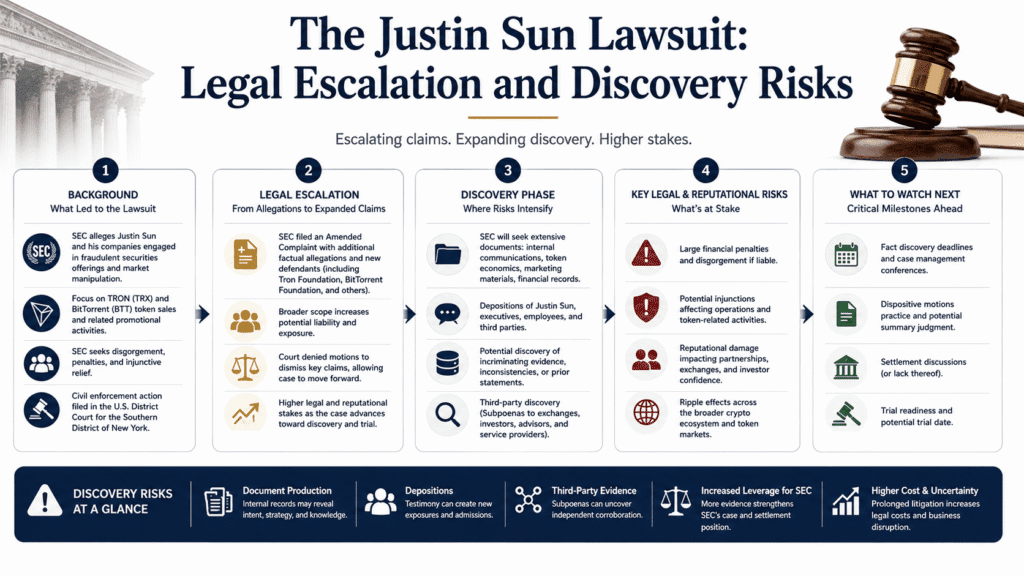
Justin Sun, the founder of Tron, invested $75 million into WLFI and advisory roles in November 2024. Shortly after, a strange thing happened. On March 5, 2026, the SEC settled its long-running fraud case against Sun. The settlement was light, with a $10 million penalty paid by a separate company. All charges against Sun personally were dismissed. The timing suggests a possible link between the investment in the president’s family project and the SEC’s decision to step back.
The Competing Legal Battles: Blacklisting vs. Defamation
The relationship between Sun and WLFI quickly soured. On April 22, Sun sued in the Northern District of California. He claims WLFI used a backdoor function to freeze his 4 billion tokens. Sun says this happened because he refused to put another $200 million into the USD1 stablecoin. He has called WLFI a “personal ATM” for the Trump family.
WLFI fought back on May 4 with a lawsuit in Miami Dade County. They sued Sun for defamation and alleged he used straw purchases and a short-selling campaign to hurt the project.
Why California Discovery is the Nuclear Option
The Florida lawsuit is mostly about reputation, which is easy to manage. The California case is much more dangerous. Because it is a federal case, it allows for a process called discovery. Sun’s lawyers could gain access to internal emails and messages. This could expose how the SEC settlement was handled and how the protocol is actually run. This legal risk is pushing members of Congress to act faster on crypto laws.
Parallel Investigations: Oil Futures and Regulatory Capture
The DOJ/CFTC Probe into Suspiciously Timed Oil Trades
While crypto is the big story, the DOJ and CFTC are looking at oil futures. They found a pattern of massive bearish trades that happened right before official news broke.
- March 23: A $500 million short was placed 15 minutes before a post about Iran de-escalation.
- April 7: A $960 million short was placed hours before a ceasefire announcement.
- April 17: A $760 million short appeared 20 minutes before the Strait of Hormuz reopened.
- April 21: A $430 million short was placed 50 minutes before a ceasefire extension.
- May 6: A $920 million short was placed 70 minutes before a leak about a memorandum of understanding.
Reuters suggests these trades could total as much as $7 billion. The traders made millions in a matter of hours.
Information Asymmetry and Insider Trading Precedent
The government is already using this logic in other cases. The DOJ recently indicted Army Sergeant Ganon Fanbike. He used classified info about the capture of Nicholas Maduro to make bets on Poly Market. He turned $33,000 into $400,000. This proves the government is willing to treat prediction markets like insider trading. If a 15-minute lead on a social media post can make millions in oil, it can do the same for Bitcoin options.
CFTC Headcount and Investigative Capacity
The agency meant to stop this, the CFTC, is struggling. Its workforce has dropped by about 24% since Trump returned to office. It is now at its lowest headcount in 15 years. This makes it harder for the government to track complex trades using systems like the CME’s TAG50.
The Legislative Showdown: The Clarity Act Held Hostage
The Digital Asset Market Clarity Act Status and Timeline
The Digital Asset Market Clarity Act is the most important crypto bill in US history. It passed the House in July 2025. It is now in the Senate Banking Committee. The White House wants it signed by July 4. This bill would create clear rules for the whole industry, but it is currently stuck.
Senator Gillibrand’s Ethical Red Line
Senator Kirsten Gillibrand has stopped the process. At Consensus Miami on May 6, she said she will not vote for the bill without an ethics provision. She wants a law that bans elected officials and their families from launching or profiting from tokens during their term. This would make the current WLFI and Trump token setups illegal.
White House Counteroffer and Legislative Stalemate
The White House, via advisor Patrick Wit, said they would accept general ethics rules. However, they refuse any rules that target specific people or positions. Critics say this is an attempt to create rules that cannot be enforced. Because of this fight, the odds of the bill passing in 2026 have dropped from 90% to 60% on Poly Market.
Implications for the Broader Digital Asset Ecosystem
Regulatory Capture as the Core Structural Risk
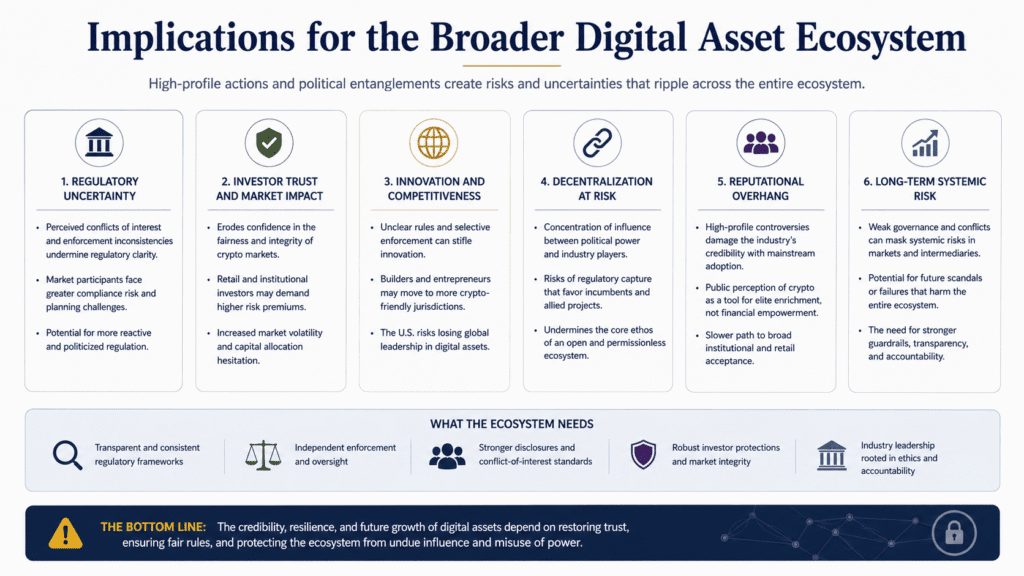
The real risk to crypto right now is not that the government hates it. The risk is regulatory capture. This happens when the people writing the laws have a direct financial stake in the outcome. When one family’s wealth triples using the very rules they help write, the system loses its neutrality.
Institutional money is still flowing in, though. Vanguard ended its crypto ban in December 2025. Morgan Stanley launched MSBT with $200 million in assets. BlackRock’s IBIT has grown to $66.7 billion. This money is moving despite the chaos, not because of it.
Expert Commentary on Conflicts of Interest
The issue of “side hustles” for presidents is a long-standing debate. Barack Obama recently mentioned on The Late Show that a president should not have businesses that foreign entities can invest in. He did not name crypto, but the context fits the current WLFI situation perfectly.
Actionable Implications for Crypto Investors
For the average investor, this means two things. First, position sizing is key. Your portfolio risk is now tied to the legal exposure of one family. If a court ruling or a new law kills a specific structure, the market will feel it. Second, self-custody is more important than ever. When the rules of the game become a political football, holding your own keys is the only way to be sure you still own your assets.
Final Thoughts
The crypto world is at a crossroads. We have a president whose wealth tripled through DeFi and tokens. We have a DOJ probe into oil trades that look like insider trading. We have the Clarity Act stalled because of a fight over ethics.
The big question is what happens next. Will the pressure force the White House to accept ethics rules and pass the Clarity Act? Or will the bill die, pushing all regulation past the 2026 midterms? If Democrats take the House in 2026, the first move might be retroactive criminal charges for these arrangements. The future of your tokens depends on whether the law remains neutral or becomes a tool for personal gain.