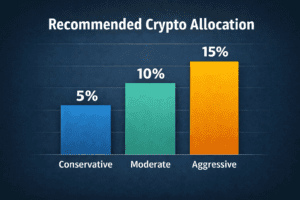
So, you’re trading crypto and want to make sure you’re not just gambling with your money. That’s smart. A big part of not losing it all, and actually making some, is figuring out how much of your cash to put into any single trade. It’s called Position Sizing, and honestly, it is way more important than you might think. It’s not about picking the next big coin; it’s about making sure one bad trade doesn’t wipe you out. Let’s break down how to get this right so you can trade with a bit more confidence.
Key Takeaways
- Position sizing is how you decide how much money to put into each trade, which is super important for managing risk.
- Figuring out your position size helps you control potential losses and also impacts how much you can gain.
- You need to adjust your approach based on how much risk you’re comfortable with and what the market is doing
Understanding Position Sizing Strategy
The Importance of Position Sizing in Crypto Trading
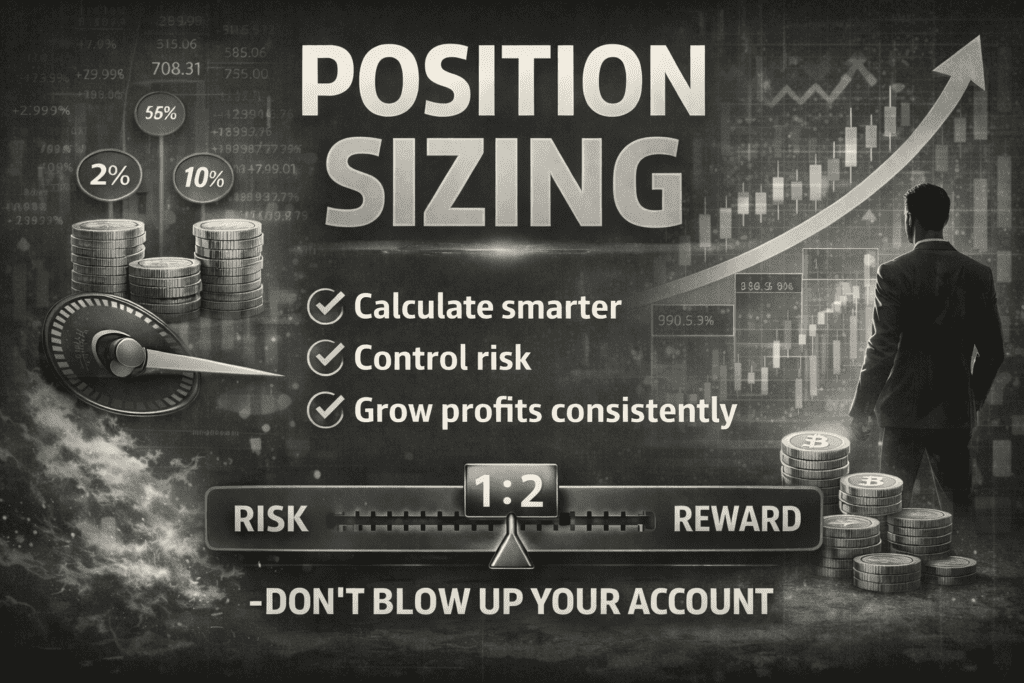
Industry-leading exchanges like KuCoin now recognize the 2% Rule as the “gold standard” for survival in volatile crypto markets, emphasizing that proper position sizing separates professional traders from gamblers. When you’re trading cryptocurrencies, it’s easy to get caught up in the excitement of finding the next big coin or the perfect entry point. But there’s a less flashy, yet incredibly important, part of trading that often gets overlooked: position sizing. Think of it as the guardrail on a winding mountain road. Without it, even a skilled driver can have a serious accident. In trading, proper position sizing is what protects your capital and keeps you in the game long-term.
Imagine you have a trading strategy that’s right 70% of the time, which sounds pretty good, right? But if you bet your entire account on each trade, a few losses in a row could wipe you out. Even with a winning strategy, you might not be able to recover. This is where smart position sizing comes in. It helps you manage how much you risk on any single trade, making sure that a few bad trades don’t end your trading career. It’s not about predicting the market’s next move; it’s about controlling your risk and ensuring you can keep trading, win or lose. This approach helps you manage risk effectively, aiming to maximize profits while keeping losses in check.
Here’s why it matters:
- Controls Risk Per Trade: It limits the amount of money you can lose on any single trade, preventing catastrophic losses.
- Handles Market Swings: Crypto markets can be wild. Good sizing helps you withstand unexpected price swings or wider spreads without blowing up your account.
- Supports Consistency: It allows you to maintain a disciplined approach, regardless of whether you’re going long or short, or if the market is up or down.
- Prevents Ruin: Most importantly, it significantly reduces the chance of losing all your trading capital.
Without a disciplined approach to sizing your trades, even the most sophisticated trading platform or the most accurate indicator can’t save your account from significant damage. It brings order to your trading execution.
Key Principles of Effective Position Sizing
Getting position sizing right isn’t about complex formulas; it’s about following a few core ideas. These principles help you make decisions that align with your overall trading plan and your comfort level with risk.
- Define Your Risk Per Trade: Before you even think about entering a trade, decide how much of your total trading capital you’re willing to risk. For most traders, this is a small percentage, often between 0.5% and 2% of their account balance. This amount is what you’re prepared to lose if the trade goes against you.
- Know Your Stop-Loss Distance: Your stop-loss order is your exit point if the trade moves against you. You need to know how far away this stop-loss is from your entry price, measured in dollars or percentage points. This distance is directly related to how much you’re risking.
- Understand Asset Volatility: Different cryptocurrencies move differently. Some are very volatile, meaning their prices can change rapidly and by large amounts. Others are more stable. Your position size should account for this volatility. A more volatile asset might require a smaller position size to keep the dollar risk the same as a less volatile one.
The basic idea is to calculate how much money you’re risking on a trade. This is usually your account risk per trade (e.g., $100) divided by the distance to your stop-loss (e.g., $0.50 per coin). The result tells you how many units of the asset you can trade.
Implementing Your Position Sizing Strategy
Once you understand the basics of why position sizing matters, the next step is putting it into practice. This involves figuring out exactly how much of your capital to commit to any single trade. It’s not just about picking a number; it’s about a disciplined approach that aligns with your personal comfort level for risk and the current market environment.
Calculating Position Size Based on Risk Tolerance
Before you even think about placing a trade, you need to know how much you’re willing to lose. This is your risk tolerance. A common starting point is to decide on a maximum percentage of your total trading capital you’re comfortable losing on any single trade. Many traders stick to between 0.5% and 2%.
Here’s a simple way to calculate your position size:
- Determine your risk per trade: Decide on a percentage of your total capital you’re willing to risk (e.g., 1%). If you have $10,000 in your account, 1% is $100.
- Set your stop-loss: This is the price at which you’ll exit the trade to limit your losses. Calculate the distance between your entry price and your stop-loss price in dollar terms.
- Calculate position size: Divide your risk per trade (in dollars) by the stop-loss distance (in dollars). This gives you the number of units (coins, shares, etc.) you can trade.
Let’s say you have $10,000 and want to risk $100 per trade. You’re looking at Bitcoin (BTC), and your entry price is $50,000 with a stop-loss at $49,000. That’s a $1,000 stop-loss distance per BTC.
Your position size would be $100 (risk per trade) / $1,000 (stop-loss distance) = 0.1 BTC.
This method helps ensure that even if your stop-loss is hit, your loss is limited to your predetermined amount, protecting your overall capital.
Adapting Position Sizing to Market Conditions
Markets aren’t static, and your position sizing shouldn’t be either. You need to adjust your approach based on what the market is doing.
- Bullish Markets: When the market is trending upwards, you might feel confident. While it’s tempting to increase your size, it’s often wiser to slightly increase your position size while still respecting your risk tolerance. This allows you to capture more of the upward move without taking on excessive risk.
- Bearish Markets: In a downtrend, you can still trade, but it’s smart to be more cautious. Reducing your position size can lower your risk exposure. This means even if prices move against you, the impact on your account is smaller, and you can still profit if your bearish prediction is correct.
- Volatility: High volatility means prices can move sharply in either direction. In such conditions, you might need to widen your stop-loss distance. If you keep your risk per trade the same, widening your stop-loss will naturally lead to a smaller position size. Conversely, in low-volatility markets, you might be able to use tighter stops and potentially slightly larger position sizes, always keeping your risk per trade constant.
Regularly reviewing your strategy and making adjustments based on market behavior is key. What worked last month might not work today. Staying flexible is how you manage risk over the long haul.
By consistently applying these calculations and adapting them to the market, you build a more robust trading plan. This disciplined approach is what separates traders who survive and thrive from those who don’t.
Wrapping Up: Your Position Sizing Game Plan
So, we’ve talked about why figuring out how much to trade is a big deal. It’s not just about picking the right coin or knowing when to buy. It’s about protecting your money so you can actually stick around long enough to make some. Remember to think about how much you’re okay with losing on any single trade, and then use that to decide your position size. Setting stop-losses is also super important – they’re like your safety net. Markets change, so don’t forget to check your strategy now and then and tweak things if needed. Getting this right helps you trade smarter, not just harder.