Master Crypto Investing: The 7-Step DYOR Framework for High Returns
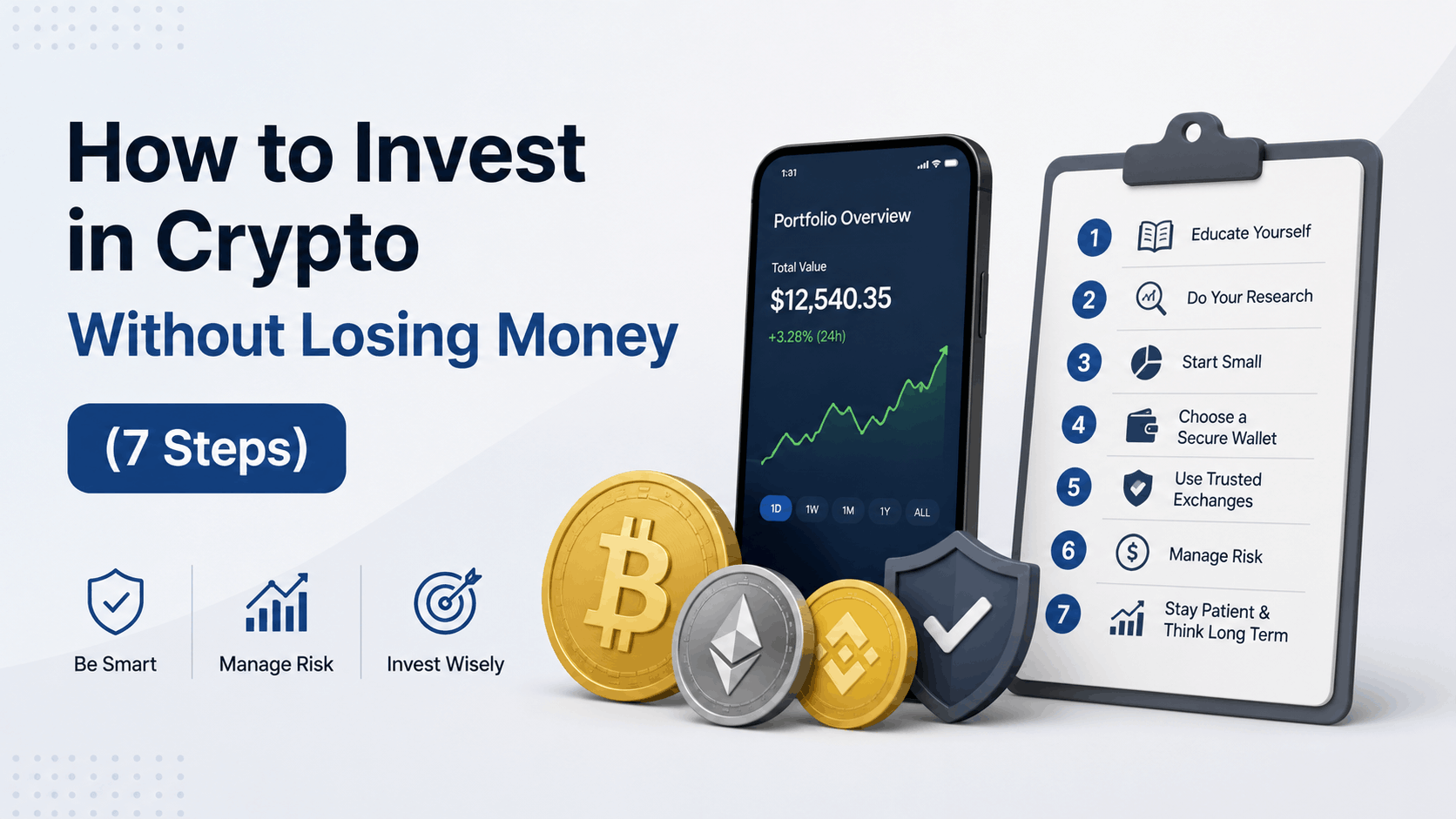
If you want to invest in crypto and actually make money, you need a solid research process before putting in a single dollar. There are over 50 million crypto coins and tokens on Coin Market Cap right now. Most of them are completely worthless. If you just buy what you see on social media, you are likely throwing your money down the toilet. The only way to win is to follow one simple rule: DYOR. Doing your own research helps you spot the real winners before the crowd arrives. This seven-step process from Coin Bureau shows you how to research crypto like a pro.
Step 1: Identifying Emerging Crypto Narratives and Capital Rotation
Crypto moves in themes called narratives. These can be anything from AI and privacy to payments and DeFi. You want to find the trend before it hits the mainstream. Most trends follow a four-stage life cycle. Staying ahead of the market means tracking which crypto themes are gaining momentum, as analysts are closely watching multiple emerging narratives that are expected to shape capital movement throughout 2026.
- Inception: A new tech breakthrough happens. Only deep researchers notice it. Prices are low.
- Excitement: VC firms start buying. People begin to notice.
- Social Proof: FOMO kicks in. Influencers post about it and prices go up fast.
- Peak Euphoria: Mainstream news reports on overnight millionaires. Rocket emojis fill your feed.
If you buy at stage four, you are too late. To find the next big thing, look at the data. Check GitHub to see if developers are active on a project. Use DeFiLlama to track Total Value Locked (TVL). If a specific chain shows a huge spike in 7-day inflows, money is moving there. You can also use tools like Santiment or LunarCrush to see which projects are getting more social mentions.
Step 2: Filtering Promising Cryptocurrencies Within a Narrative
Once you have a theme, you need to find the best coins in that group. Use CoinGecko or CoinMarketCap to filter by narrative. To find a winner, look for three things.
First, check the market cap. The price of a coin doesn’t matter as much as the market cap. A low market cap means it takes less buying pressure to make the price 2x or 10x. Balance your portfolio with some large caps (over $1 billion), mid-caps ($100 million to $1 billion), and small caps (under $100 million).
Second, ignore the “low price” trap. Many new investors think a coin is cheap because it has many zeros. This is a mistake. Market cap determines the upside, not the sticker price.
Third, check accessibility. The coin should be easy to buy on several exchanges. If US investors can’t buy it, it’s harder for the price to pump.
Step 3: Analyzing Adoption Metrics for Real-World Usage
A good narrative isn’t enough. You need to see if the project actually has a pulse. You can check this in three layers.
The first layer is on-chain data. Use a block explorer like Etherscan. Look at the number of active wallet addresses and new accounts. Check the daily transaction count. Look at the holder list. If a few “whales” hold most of the supply, they could crash the price by selling. Just remember that bots can fake some of these numbers.
The second layer is economic health. Use Token Terminal or DeFiLlama. Look at the fees the project earns and the total trading volume.
The third layer is off-chain data. Check how many people downloaded the project’s mobile app or browser extension. If the numbers are flat or dropping, the project is dying.
Step 4: Investigating Founders and the Project Team
If the founders are anonymous, be very careful. That is a huge red flag. You want a team that is public and accountable.
Start by watching interviews with the founders on YouTube. These are often the best source of info. Listen to how they explain the project. If they can’t explain it in plain English, something is wrong. Watch their interviews from oldest to newest. Take notes on why they started the project and how it works.
Check their funding. Who invested in them and when? Look for a roadmap and see if they hit their past goals. It is a good sign if the team admits to weaknesses. Honest teams are more credible than those who claim everything is perfect. You can use Crunchbase to find hidden founders or the software companies backing the project.
Step 5: Deconstructing Tokenomics for Sustainable Value
Many people skip this step, but bad tokenomics can kill a great project. First, know if you are buying a coin or a token. Coins have their own blockchain and pay for network fees. Tokens are built on other chains and have specific uses.
Check the supply metrics carefully. A high circulating supply is usually better. If only a small amount of tokens are in the market, a huge wave of new tokens could hit later and drop the price. This is where Fully Diluted Valuation (FDV) comes in. FDV shows the market cap if every single token were released.
Look at the vesting schedule. This shows when early investors and team members can sell their tokens. Watch out for “cliff” schedules where a massive amount of tokens unlock at once. This often leads to a price crash.
Finally, check the utility. Why do people need to hold this token? Whether it is for staking, voting, or payments, there must be a reason for demand.
Step 6: Benchmarking Against Competitors Within the Narrative
Now you must see if your project is actually the best in its class. Go to the project website and read everything. Don’t just look at the homepage. Read the terms and conditions and the privacy policy. These pages often reveal who really runs the project.
Read the documentation and the FAQ. Search for terms like “inflation” or “staking” to see how they work. A project that tries to do too many things at once often fails. It should solve one specific problem very well.
Compare your project to the market leaders in that narrative. Look at the ones with the biggest market caps. Does your project offer something better or faster? If it doesn’t have a clear edge, it will struggle to take market share from the leaders.
Step 7: Stress-Testing Your Investment Thesis
This is the hardest part. You need to try and prove yourself wrong. Ask tough questions to find the holes in your plan.
Ask what happens if the users leave. Are they there for the tech, or are they just chasing rewards? If the rewards stop, will the users stay?
Check the token unlocks again. If early investors bought in at a tiny price, will they hold or dump their bags? Consider the competition. Could a bigger company launch a better version tomorrow?
Think about laws and rules. If the SEC calls the token a security, will exchanges delist it? Finally, think about a bear market. If Bitcoin drops 20%, altcoins often drop 40% or more. Can the project survive that?
Ask yourself: If all these risks came true, would I still want to own this? If the answer is yes, you have real conviction.
Final Thoughts
The crypto market is a minefield, but DYOR is your map. By following these seven steps, you stop gambling and start investing. You move from following hype to understanding value.
You don’t need a perfect project to make money. You just need a project where the pros outweigh the cons. Use these tools to filter the noise and find the gems. Your portfolio will thank you. Now, go put this framework to work on your next potential trade.
FAQ
Q1. How do I start to invest in crypto as a beginner?
To invest in crypto as a beginner, start by choosing a trusted exchange like Binance or Coinbase, create an account, and buy a small amount of Bitcoin or Ethereum. Never invest more than you can afford to lose and always research a coin before buying.
Q2. Is it safe to invest in crypto right now?
Crypto is high risk but can be rewarding if you invest wisely. The key is to research every coin, diversify your portfolio and never put all your money in one coin. No investment is 100% safe but a solid research process reduces your risk significantly.
Q3. How much money do I need to invest in crypto?
You can start to invest in crypto with as little as $10. Most exchanges allow you to buy fractional coins so you don’t need thousands of dollars to get started. Start small, learn the market and scale up as your confidence grows.
Q4. What is the best crypto to invest in for high returns?
There is no single best crypto but Bitcoin and Ethereum are the safest long term options. For higher returns many investors look at smaller altcoins with strong fundamentals, active development teams and real world use cases before investing.
Q5. How do I research a crypto coin before investing?
To research a crypto coin check its whitepaper, team, use case, tokenomics, market cap and community activity. Look for red flags like anonymous teams, no clear roadmap or unrealistic promises. Always verify information from multiple sources before investing.