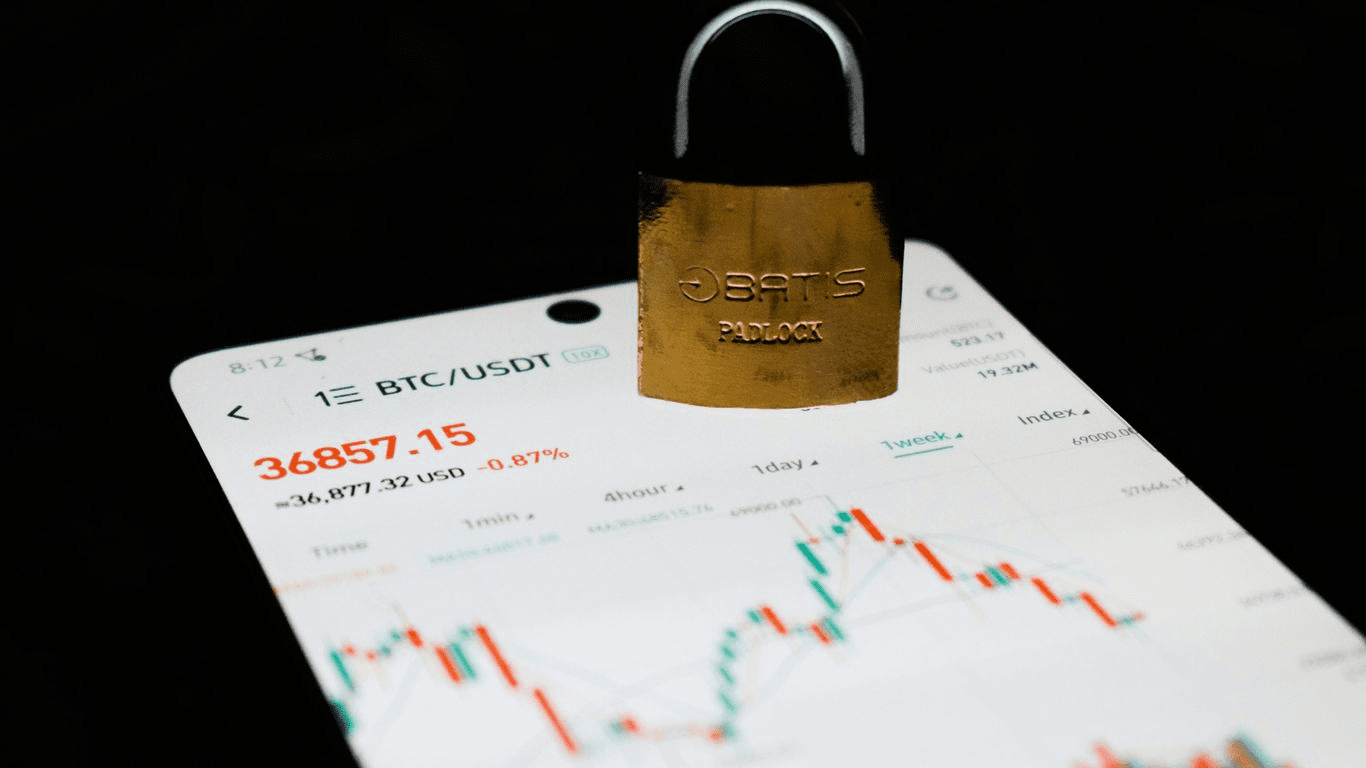
High leverage crypto trading risks are not theoretical — they’re account-ending. At 10x leverage, a single 10% price move against your position wipes out 100% of your capital. At 25x, it only takes a 4% drop.
For small accounts, this isn’t just a risk. It’s the most common way traders lose everything — fast, quietly, and without a second chance to recover.
This guide breaks down exactly what those risks are, how they play out in real trades, and what you can do to protect your account before you place your next position.
For more on sudden market drops and how to protect your portfolio, check out our detailed guide on Crypto Crash.
Key Takeaways
- At 10x leverage, a 10% price drop wipes 100% of your account. At 25x, it only takes a 4% move. Calculate your liquidation price before every trade — not after.
- Margin calls don’t give you time. If Bitcoin drops sharply while you’re offline, your exchange will force-close your position automatically. For a $500 account, a margin call is almost always an instant liquidation.
- Small accounts have no recovery margin. A $10,000 account can absorb a bad trade and continue. A $500 account at high leverage cannot. Keep leverage at 2x–3x maximum until your account can absorb a full liquidation without exiting the market.
- Hidden costs erode every trade. Borrowing fees on leveraged positions accumulate daily. A winning trade held too long can turn into a losing one purely from interest charges.
- Stop-loss orders are non-negotiable. Set yours before you open the position, not after the market moves against you. A stop-loss at 5% below entry on a 5x leveraged trade limits your loss to 25% of your capital — painful but survivable.
What is high leverage crypto trading?
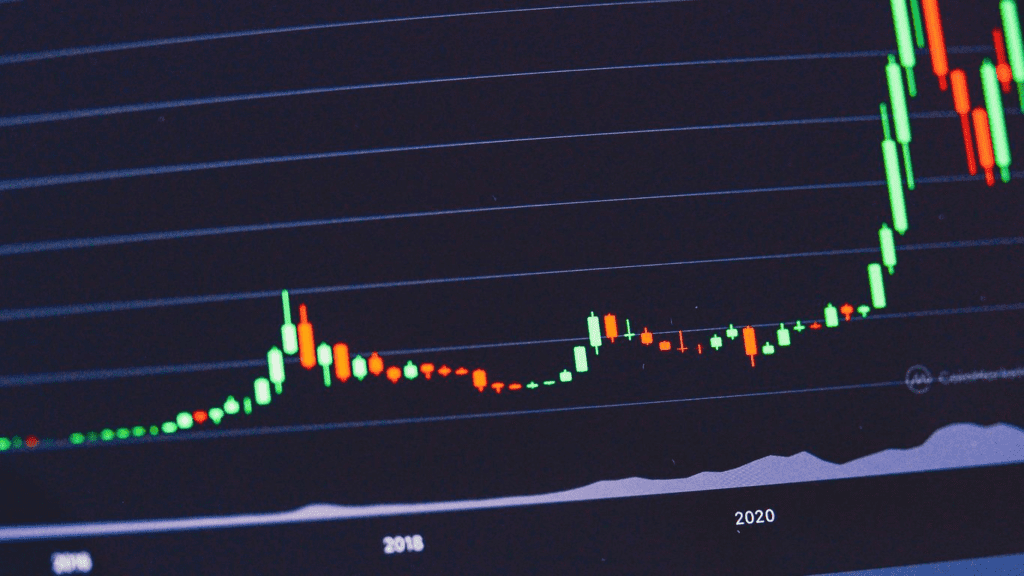
High leverage crypto trading is a strategy where traders borrow funds from an exchange to open positions far larger than their actual capital — for example, with 10x leverage, a trader controls $10,000 worth of crypto using only $1,000 of their own money, which amplifies both potential profits and potential losses equally. Leverage lets you control a position larger than your actual account balance by borrowing funds from the exchange. If you deposit $100 and use 10x leverage, you’re trading a $1,000 position. The exchange lends you the remaining $900, using your $100 as collateral – called your margin.
This is standard across crypto futures and perpetual contracts on platforms like Binance Futures, Bybit, and dYdX. Spot trading doesn’t involve leverage by default; you’re buying the asset outright. Leverage only enters the picture with derivatives.
How leverage ratios work (2x, 10x, 100x explained)
The ratio tells you exactly how much your position is multiplied relative to your margin. At 5x, every 1% price move translates to a 5% gain or loss on your capital. At 100x, a 1% move is a 100% swing – meaning a single percent against you is a full wipeout.
Here’s how liquidation thresholds map to common leverage ratios, using a Bitcoin entry at $80,000:
| Leverage ratio | Max adverse move before liquidation | BTC liquidation price (entry $80,000) | Verdict for small accounts |
| 2x | 50% | $40,000 | Low risk – reasonable starting point |
| 5x | 20% | $64,000 | Moderate – manageable with tight stop-losses |
| 10x | 10% | $72,000 | High – one news event can wipe you |
| 25x | 4% | $76,800 | Very high – not suitable for small accounts |
| 50x | 2% | $78,400 | Extreme – avoid entirely as a beginner |
| 100x | 1% | $79,200 | Gambling, not trading |
Bitcoin regularly moves 5–10% in a single day. At 25x leverage, that’s not volatility – that’s liquidation. At 50x, a 2% overnight candle ends your trade before you wake up.
Spot vs derivatives: where leverage applies
Spot trading means you own the actual asset. You buy 0.01 BTC, you hold 0.01 BTC. No leverage, no margin calls, no liquidation risk beyond the asset going to zero.
Derivatives – futures, perpetuals, options – are contracts that track an asset’s price without you owning it. This is where leverage lives. Perpetual contracts (the most common product on Bybit, Binance Futures, and dYdX) have no expiry date and charge a funding rate every 8 hours to keep the contract price anchored to spot.
The practical difference: a spot trader who buys BTC at $80,000 and watches it drop to $72,000 is down 10%. A derivatives trader at 10x leverage with the same entry is liquidated before it even hits $72,000.
Benefits and risks of high leverage crypto trading
Why traders use high leverage
The appeal is real. Done right, leverage offers three genuine advantages:
- Amplified gains on small moves. A 2% BTC move at 10x leverage returns 20% on your margin. Spot traders need a 20% price move to achieve the same.
- Capital efficiency. You can hold a meaningful position without tying up your entire account. A trader with $5,000 can run a $25,000 position at 5x and keep $3,000 in reserve.
- Ability to short. Leverage lets you profit from falling prices. During bear markets, this is the only way to generate returns from price action.
Professional traders use leverage – but they use it with strict position sizing, defined stop-losses, and accounts large enough to absorb bad trades. The mechanics work. The problem is applying them to a $500 account with no safety net.
The risks of high leverage trading in crypto
The risks of high leverage trading in crypto aren’t just about losing money – they’re about losing it faster than you can react. Here’s what actually kills small accounts:
- Liquidation. Your position gets force-closed the moment your margin is exhausted. No warning, no grace period. At 10x leverage on a $500 account, a 10% adverse move ends the trade – and your account.
- Funding rate drain. On perpetual contracts, you pay (or receive) a funding rate every 8 hours. During strong bull runs, longs pay shorts. Holding a 10x long position for a week can cost 1–3% of position value in funding alone.
- Emotional pressure. Watching a leveraged position move against you is psychologically brutal. Most beginners either close too early (locking in a loss) or hold too long (getting liquidated). Neither is a winning strategy.
- Slippage on exits. In fast-moving markets, your stop-loss may execute at a worse price than set. At high leverage, even a 0.5% slippage gap can meaningfully increase your loss.
- Cascade liquidations. When the market drops sharply, thousands of leveraged longs get liquidated simultaneously. Those liquidations push the price down further, triggering more liquidations. Small accounts get caught in this cascade with no way out.
How liquidation works (and how to calculate your price)
Most traders know leverage is risky. Very few know the exact price point where their account gets wiped. That number is your liquidation price – and calculating it before you open a trade is the difference between managing risk and gambling.
The formula:
Liquidation Price = Entry Price × (1 − 1 ÷ Leverage)
Example: You buy Bitcoin at $80,000 with 10x leverage.
Liquidation Price = $80,000 × (1 − 1 ÷ 10) = $80,000 × 0.90 = $72,000
A 10% drop. That happens on a slow Tuesday in crypto. Note that exchanges also apply a maintenance margin buffer (typically 0.5–1%), so your actual liquidation price is slightly higher than this formula suggests – always check your platform’s specific calculator.
Margin calls explained step by step
A margin call is the exchange’s warning that your margin is running low and you need to deposit more funds to keep the position open. If you don’t respond in time – or don’t have the funds – the exchange force-closes your position. This is liquidation.
Here’s a real scenario with real numbers:
The setup:
- Account balance: $500
- Leverage: 10x
- Position size: $5,000 (long on Bitcoin at $80,000)
- Margin used: $500 (your entire account)
Day 1 – The drop begins: Bitcoin falls 6% to $75,200. Your position is now worth $4,700. Your unrealised loss is $300 – 60% of your $500 margin already gone. The exchange sends a margin call requiring you to deposit an additional $200 to keep the position open.
Day 1 – You don’t respond: You’re offline, asleep, or simply don’t have the $200. The exchange doesn’t wait.
Day 2 – Forced liquidation: Bitcoin drops another 4%, hitting $72,200. Your margin is fully exhausted. The exchange automatically closes your position at a loss of $490 out of your original $500. You’re left with $10.
The trade didn’t need to go to zero. Bitcoin only dropped 10% – a move that happens regularly. Your account effectively went to zero because of the leverage applied to a normal market move.
Crypto leverage trading risks: liquidation scenarios for small accounts
Crypto leverage trading risks hit small accounts disproportionately hard because there’s no buffer. Here’s what the same 5% price drop does across different leverage levels on a $500 account:
| Account size | Leverage | Position size | 5% price drop loss | % of account wiped |
| $500 | 5x | $2,500 | $125 | 25% |
| $500 | 10x | $5,000 | $250 | 50% |
| $500 | 25x | $12,500 | $625 | 100% – liquidated |
| $500 | 50x | $25,000 | $1,250 | 100% – liquidated |
A 5% price drop. Not a crash – a normal afternoon in the crypto market. At 10x leverage, that’s half your account gone in a single session. At 25x, you don’t make it to the end of the day.
What high leverage actually means for a $500 account
Most leverage risk guides use abstract examples. Here’s what it looks like at the account sizes most beginners actually start with.
Now compare that $500 account to a larger one running the same leverage:
| Account size | Leverage | Position size | 5% price drop loss | % of account wiped |
| $10,000 | 10x | $100,000 | $5,000 | 50% |
| $10,000 | 5x | $50,000 | $2,500 | 25% |
| $10,000 | 2x | $20,000 | $1,000 | 10% |
The leverage is identical. The difference is that a $10,000 account trader has room to absorb a loss, adjust strategy, and keep trading. A $500 account trader does not.
The core problem: There’s no recovery margin. Every trade at high leverage is a potential permanent exit from the market. This is why professional traders consistently recommend a maximum of 2x–3x for accounts under $5,000 – not because higher leverage can’t produce gains, but because one losing trade at high leverage ends the game entirely.
Before you open any leveraged position on a small account, ask yourself three questions:
- If this trade goes against me by 10%, how much of my account is gone?
- Do I have funds available to meet a margin call if one comes?
- Can I afford to lose this entire position and still continue trading?
If the answer to any of these is no – the leverage is too high.
Borrowing fees and overnight interest
When you open a leveraged position, you’re borrowing funds from the exchange. That loan isn’t free. On most centralized exchanges, you pay a daily borrowing fee – typically 0.01–0.05% per day on the borrowed amount.
On perpetual contracts, this takes the form of a funding rate charged every 8 hours. During strong bull markets, the funding rate for longs can spike to 0.1% per 8-hour period – that’s 0.3% per day, or roughly 9% per month on your position size. A 10x leveraged position held for 30 days could lose 90% of its margin to funding fees alone, even if the price doesn’t move against you.
The practical rule: leveraged positions are short-term instruments. Holding them for days or weeks turns a directional trade into a fee-eating exercise.
Slippage and whale manipulation
Slippage is the gap between the price you expect and the price you actually get when your order executes. In fast-moving markets – exactly the conditions that trigger stop-losses – slippage can be 0.5–2% on altcoins with thin order books. At 10x leverage, a 1% slippage gap doubles your intended loss.
Whale manipulation makes this worse. Large players deliberately push prices into zones where retail stop-losses cluster, triggering a cascade of forced sells that moves the price further. This is called a stop hunt. Your stop-loss fires, you exit at a loss, and the price reverses immediately after. It’s not a conspiracy theory – it’s a documented pattern in low-liquidity crypto markets.
- Sudden news events cause rapid price changes that outpace stop-loss execution.
- Large trades by whales create artificial volatility around key price levels.
- Regulatory announcements can trigger 10–20% moves in minutes – well inside any leveraged position’s liquidation zone.
Stop-loss orders and position sizing
A stop-loss order tells the exchange to close your position automatically if the price reaches a set level. It’s the single most important tool in leveraged trading – and the one most beginners skip because they’re convinced the trade will recover.
The math on why it’s non-negotiable: a stop-loss at 5% below entry on a 5x leveraged trade limits your loss to 25% of your capital. Painful, but survivable. No stop-loss at 10x leverage means a 10% move wipes everything.
Understanding the difference between a stop-loss vs liquidation is critical – they’re not the same thing, and confusing them is expensive.
Position sizing is the other half of this equation. The standard rule: risk no more than 1–2% of your total account on any single trade. With leverage, this means your actual position size is much smaller than your account balance suggests.
Example: $1,000 account, 1% risk per trade = $10 maximum loss. At 5x leverage, your position size is $50 – not $5,000. That’s the math most beginners ignore.
Setting realistic limits for a small account
Small accounts need tighter rules, not looser ones. Here’s a practical framework:
- Maximum leverage: 2x–3x until your account exceeds $5,000. This keeps your liquidation price far enough away to survive normal daily volatility.
- Maximum risk per trade: 1–2% of total account balance. At $500, that’s $5–$10 per trade.
- Maximum open positions: 1–2 at a time. More positions = more margin used = faster liquidation if the market moves against you on multiple fronts.
- No trading during high-impact news events. Fed announcements, CPI data, major protocol hacks – these create 5–15% moves in minutes. Leveraged positions don’t survive that.
Defining profit targets
Risk management isn’t just about limiting losses – it’s about knowing when to take profits. Without a defined target, traders hold winning positions too long, watch them reverse, and end up at breakeven or worse.
A simple rule: aim for a risk-reward ratio of at least 1:2. If you’re risking $10 on a trade, your target should be at least $20. This means you can be wrong 40% of the time and still be profitable overall.
Set your take-profit level at the same time you set your stop-loss – before you open the position. Once the trade is live, emotions take over. The levels you set in advance are almost always better than the decisions you make mid-trade.
Best platforms for high leverage crypto trading
Not all platforms are equal. The right choice depends on your location, experience level, and how much leverage you actually need. Here’s a practical comparison of the four most widely used options:
| Platform | Max leverage | Type | Key feature | Best for |
| Binance Futures | Up to 125x | Centralized (CEX) | Deepest liquidity, widest asset selection, built-in risk tools | Intermediate to advanced traders who want volume and tight spreads |
| Bybit | Up to 100x | Centralized (CEX) | Clean UI, strong copy-trading features, insurance fund for socialized losses | Beginners to intermediate – easier onboarding than Binance |
| Kraken | Up to 50x | Centralized (CEX) | Strong regulatory compliance, US-friendly, conservative leverage caps | US-based traders who prioritize regulatory safety |
| dYdX | Up to 20x | Decentralized (DEX) | Non-custodial, no KYC, perpetuals on-chain with low fees | Privacy-focused traders comfortable with self-custody and DeFi |
A few things worth knowing before you pick one:
- Binance and Bybit offer the highest leverage but also the most complex fee structures. Funding rates on popular pairs can spike significantly during trending markets.
- Kraken is the most conservative option – its 50x cap and regulatory standing make it the go-to for US traders who want to stay on the right side of compliance.
- dYdX caps leverage at 20x, which is actually a feature for beginners. The decentralized structure means no exchange counterparty risk, but you’re responsible for your own wallet security.
Disclaimer: Always verify the regulatory status of any leveraged trading platform in your jurisdiction before depositing funds. Leverage products are restricted or banned in several countries, including for retail traders in the UK and parts of the EU.
What is the maximum leverage available on crypto exchanges?
It varies by platform and asset. Binance Futures offers up to 125x on Bitcoin perpetuals. Bybit goes up to 100x. Kraken caps at 50x. dYdX tops out at 20x. That said, maximum available leverage and maximum sensible leverage are very different numbers. Most experienced traders use 3x–10x at most, regardless of what the platform allows.
Can you lose more than your initial investment with leverage?
On most major exchanges, no – thanks to auto-deleveraging and insurance funds that absorb losses beyond your margin. Your position gets liquidated before your balance goes negative. However, in extreme market conditions (flash crashes, low liquidity), some platforms have clawed back losses from profitable traders to cover the gap. Always read the exchange’s liquidation policy before trading.
Can you lose more than your initial investment with leverage?
On most major exchanges, no – thanks to auto-deleveraging and insurance funds that absorb losses beyond your margin. Your position gets liquidated before your balance goes negative. However, in extreme market conditions (flash crashes, low liquidity), some platforms have clawed back losses from profitable traders to cover the gap. Always read the exchange’s liquidation policy before trading.
What leverage is recommended for beginners?
2x to 3x maximum. At 2x, your liquidation price is 50% below entry – far enough away that normal daily volatility won’t end your trade. This gives you room to learn how the market moves without a single bad session wiping your account. Increase leverage only after you’ve been consistently profitable at lower ratios for at least 3–6 months.
How do I calculate my liquidation price?
Use this formula for a long position: Liquidation Price = Entry Price × (1 − 1 ÷ Leverage). For a short: Liquidation Price = Entry Price × (1 + 1 ÷ Leverage). Example: long BTC at $80,000 with 10x leverage → liquidation at $80,000 × 0.90 = $72,000. Most exchanges also have a built-in liquidation calculator in the order panel – use it every time before confirming a trade.



![Read more about the article “EXPOSED: BlackRock Crypto Takeover [No One’s Telling You]”](https://cryptonomicshub.com/wp-content/uploads/2026/05/ChatGPT-Image-May-17-2026-09_35_19-PM-1-300x169.png)