The bitcoin vs altcoins allocation strategy for 2026 could decide whether your portfolio outperforms the cycle—or gets left behind. Most retail traders on Binance and Coinbase are unknowingly overweight the wrong side.
Thinking about how to split your crypto money between Bitcoin and all the other coins, often called altcoins, for 2026? It’s a big question, and getting it right can make a real difference. This isn’t about guessing; it’s about having a plan. We’ll walk through how to look at Bitcoin’s role and how to pick and move your money around altcoins, all while keeping your cash safe. Let’s figure out a smart bitcoin vs altcoins allocation strategy for you.
Before you rebalance again, read Crypto Flash Crash: 90% Missed This Signal — the exact liquidity trap that blindsided 90% of Binance/Coinbase traders (US/Canada ALERT before the next shakeout).
Key Takeaways
- Understand Bitcoin’s market share (dominance) to see where money is flowing. When Bitcoin dominance goes up, it often means money is moving out of altcoins. When it goes down, altcoins might be getting ready for a run.
- Don’t just pick altcoins randomly. Look at what they actually do and if people are talking about them for good reasons. Be ready to move your money between different altcoins as new trends pop up.
- Always protect your money. Decide how much you’ll risk on any single investment and regularly check and adjust your portfolio to keep your chosen balance between Bitcoin and altcoins.
Bitcoin vs Altcoins: Key Differences (2026)
The core difference between Bitcoin and altcoins lies in how they behave within the broader crypto market. Bitcoin acts as the primary liquidity driver—most capital entering crypto flows into Bitcoin first, making it relatively more stable and less volatile. Altcoins, in contrast, are highly dependent on Bitcoin’s movement and tend to perform only after Bitcoin stabilizes or trends upward. This is why Bitcoin typically shows controlled price action, while altcoins experience sharper rallies and deeper corrections. Understanding this relationship is critical, as many investors enter altcoins too early, before capital rotation begins, leading to poor performance despite choosing fundamentally strong projects.
Bitcoin and altcoins serve fundamentally different purposes in a crypto portfolio. Bitcoin (BTC) is digital gold — a store of value with a fixed supply of 21 million coins. Altcoins like Ethereum (ETH), Solana (SOL), and Cardano (ADA) prioritize programmability, smart contracts, and decentralized applications (dApps). While Bitcoin focuses on security and scarcity, altcoins offer innovation and higher growth potential — but with significantly more risk.
Bitcoin vs Altcoins: Quick Comparison
| Factor | Bitcoin | Altcoins |
|---|---|---|
| Risk | Lower | Higher |
| Volatility | More Stable | Highly Volatile |
| Return Potential | Moderate | High but Unpredictable |
| Liquidity | Very High | Varies by project |
| Market Role | Leads the market | Follow Bitcoin trends |
| Adoption | Institutional + global | Limited, project-specific |
| Downside Risk | Relatively controlled | Severe drawdowns common |
Bitcoin carries lower volatility (typically 30-50% annualized) compared to altcoins (60-100%+). During the 2022 bear market, Bitcoin dropped 77% while many altcoins fell 90-95% — and some never recovered. Regulatory risk is also lower for Bitcoin, which the SEC classifies as a commodity. Altcoins face ongoing legal uncertainty, with several labeled as unregistered securities. Additionally, altcoins carry team risk, protocol bugs, and token inflation from continuous unlocks.
Understanding Bitcoin Dominance for Allocation
When you’re building your crypto portfolio for 2026, one of the first things you’ll want to get a handle on is Bitcoin dominance. It sounds technical, but it’s really just a way to see how much of the total crypto market value belongs to Bitcoin. Think of it like this: if the whole crypto market is a pie, Bitcoin dominance tells you how big a slice Bitcoin has. This number is super important because it often tells us where the money is flowing.
Bitcoin Dominance Cycles and Their Impact
Bitcoin dominance is widely tracked by major market data providers and often used by analysts to interpret cyclic capital rotation between Bitcoin and altcoins. For deeper insight into how Bitcoin’s share of the total cryptocurrency market impacts altcoin performance and broader market trends, check out this data and explanation on CoinMarketCap’s Bitcoin Dominance. Bitcoin dominance isn’t static; it moves in cycles. Historically, when the crypto market gets shaky or uncertain, people tend to move their money into Bitcoin. They see it as the safest bet in a volatile space. This makes Bitcoin’s slice of the pie bigger, and its dominance percentage goes up. On the flip side, during strong bull markets, especially when things are really heating up, money often moves out of Bitcoin and into altcoins. People chase higher returns in smaller coins, and Bitcoin’s dominance percentage drops. This is often when you hear about “altcoin season.”
As of March 2026, Bitcoin’s dominance is holding strong at around 59.4%. This stability suggests that altcoins might experience relative calm even if Bitcoin’s price drops towards $60,000. This means that while Bitcoin is still the king, the altcoin market has matured enough to not always get completely wiped out when Bitcoin dips. You need to watch these shifts. If dominance is rising, it might be a good time to be cautious with your altcoin picks or even add more to your Bitcoin holdings. If dominance is falling after a big Bitcoin run, it could signal that altcoins are about to get interesting and offer opportunities for bigger gains.
Understanding these cycles helps you make smarter decisions about where to put your money. It’s not just about picking coins; it’s about timing and understanding the broader market mood.
Bitcoin vs Altcoins Investment Strategy (2026)
An effective Bitcoin vs altcoins investment strategy in 2026 is based on timing and capital rotation rather than fixed allocation percentages. Bitcoin generally dominates during uncertain or early market phases due to its liquidity and institutional demand. As the market gains strength and Bitcoin consolidates, capital gradually shifts into altcoins, creating short periods of high returns. A practical approach is to maintain Bitcoin as the core holding while increasing altcoin exposure only when market conditions support higher risk. Investors who fail to adjust their allocation dynamically often underperform by either overexposing themselves to altcoins too early or missing the peak altcoin phase entirely.
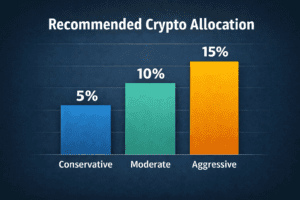
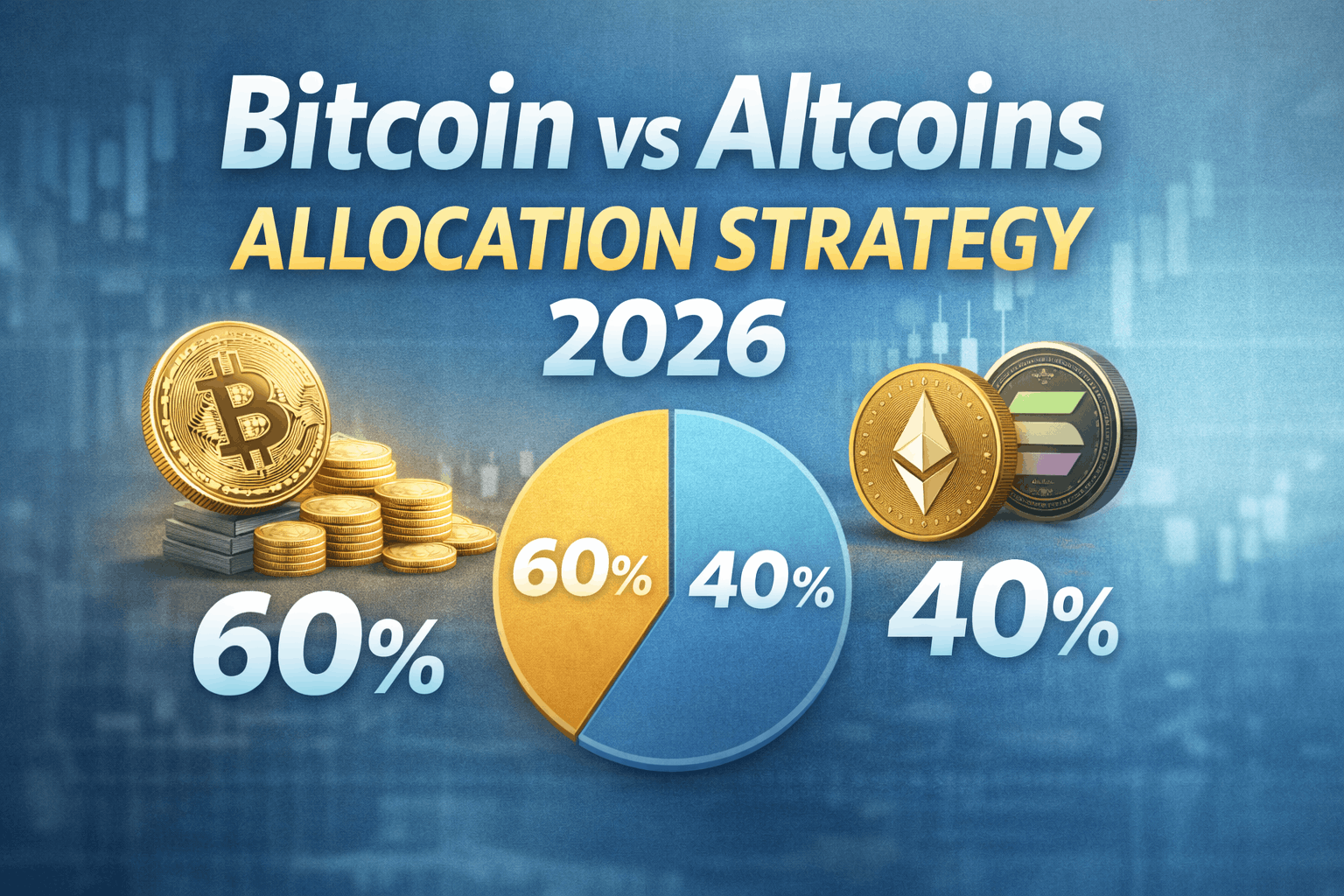
A proven allocation strategy for 2026 is the 60/40 model: 60-80% Bitcoin as your core holding, and 20-40% altcoins as satellite positions. Increase altcoin exposure during early bull markets (typically 6-12 months after a Bitcoin halving) to capture higher upside. Rotate back into Bitcoin during late cycle phases to preserve gains. For conservative investors, a 100% Bitcoin portfolio remains valid. For aggressive investors, a 50/50 split can work — but only if you actively manage risk.
Navigating Capital Flows between Bitcoin and Altcoins
So, how do you actually use this information? It’s about watching the trends. When Bitcoin dominance is trending upwards, it’s often a sign that the market is seeking safety. This might mean reducing your exposure to riskier altcoins and focusing on Bitcoin or more stable assets. Conversely, a downward trend in Bitcoin dominance, especially after a period of Bitcoin strength, can indicate that investors are feeling more confident and are willing to take on more risk in the altcoin market. This is often your cue to look for promising altcoins that could potentially see significant growth.
Here’s a simple way to think about it:
- Dominance Rising: Consider reducing altcoin exposure, focus on Bitcoin, or look for defensive altcoins.
- Dominance Falling: This could be a green light for altcoin investments, especially those with strong fundamentals.
- Stable Dominance: The market might be balanced, allowing for more selective altcoin investments based on their individual merits.
It’s not a perfect science, of course. You always need to look at other factors like overall market sentiment, trading volumes, and specific news related to Bitcoin and the altcoins you’re interested in. But keeping an eye on Bitcoin dominance gives you a significant edge in understanding the flow of capital and positioning your portfolio accordingly.
Strategic Altcoin Selection and Rotation
Fundamentals vs Narrative in Altcoin Choices
While narratives often drive short-term hype around altcoins, seasoned analysts emphasize that utility and real economic value are increasingly guiding investor decisions — separating signal from noise in 2025 and beyond. For a professional view on how markets are rewarding utility over speculation in the current cycle, see this report from CoinDesk on how the market now prioritizes real value over narratives. When you’re looking at altcoins, it’s easy to get caught up in the hype. Everyone’s talking about the next big thing, the coin that’s going to 100x. But if you want to build a solid portfolio for 2026, you need to look beyond just the buzz. It’s about balancing what’s real – the project’s actual value – with what the market is currently focused on.
Think of fundamentals as the bedrock. This means digging into the project itself. What problem does it solve? Is the technology sound? Who is the team behind it, and what’s their track record? How the tokens are distributed (tokenomics)? Is anyone actually using this thing? Projects with strong fundamentals are more likely to last when the market inevitably shifts.
On the other hand, narratives are the stories that drive short-term interest. This could be anything from a new trend in decentralized finance (DeFi), the rise of AI-related tokens, or even a surge in meme coin popularity. Narratives can create massive price pumps, but they often fade as quickly as they appear. The real skill is in understanding when a narrative is backed by solid fundamentals and when it’s just a fleeting trend.
Here’s a quick way to think about it:
- Strong Fundamentals + Emerging Narrative: This is often the sweet spot. A good project gaining market attention. Look for projects with clear use cases and active development.
- Weak Fundamentals + Strong Narrative: High risk, high reward. These can pump hard but are prone to crashing when the hype dies down. Be cautious and have an exit strategy.
- Strong Fundamentals + Weak Narrative: Might be undervalued. These projects could be gems waiting for the market to notice them. Requires patience.
- Weak Fundamentals + Weak Narrative: Generally, avoid these. They lack both real value and market interest.
Evaluating both aspects helps you make smarter decisions. You don’t want to miss out on potential gains, but you also don’t want to get caught holding the bag when the narrative shifts. It’s about finding that balance.
Implementing an Altcoin Rotation Strategy
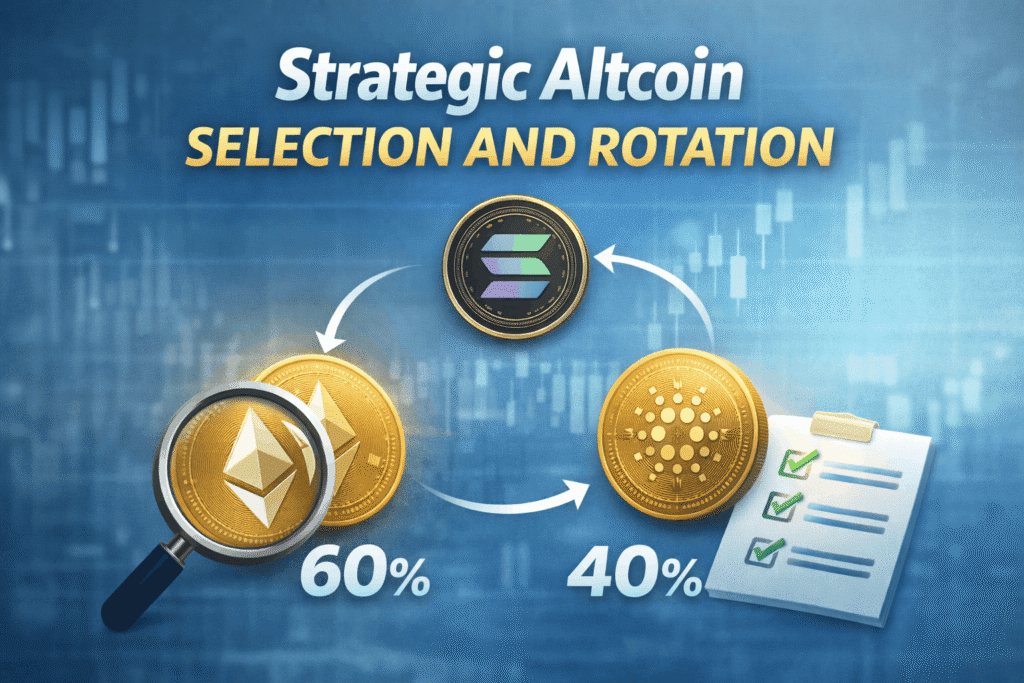
Once you’ve identified promising altcoins, the next step is knowing when and how to move your capital. This is where an altcoin rotation strategy comes in. It’s about actively shifting your investments between different sectors or coins as new trends emerge and gain momentum. The goal is to catch these waves of capital flow and maximize your returns.
Here’s how you can approach it:
- Track Emerging Sectors: Keep an eye on what’s hot. Are Layer-1 Blockchain gaining traction? Is there a new wave of innovation in decentralized storage or gaming? Use tools that show trending coins and sectors based on trading volume and social media buzz.
- Allocate to Outperformers: Once you see a sector or a specific coin starting to lead the market, consider allocating a portion of your portfolio to it. Don’t go all-in; remember diversification.
- Take Profits and Rotate: As a sector or coin reaches its peak, or when a new, more compelling narrative starts to build, it’s time to take profits. Then, redeploy that capital into the next emerging trend before it becomes mainstream.
This constant movement is key to profiting from the dynamic crypto market. It requires staying informed and being ready to act quickly. Think of it like surfing – you need to paddle hard to catch the wave, ride it, and then get ready for the next one.
Risk Management and Portfolio Rebalancing
Managing your crypto portfolio isn’t just about picking winners—it’s about protecting your downside and keeping your approach steady, even when the market is anything but. Solid risk management practices make the difference between sticking around in tough cycles and getting wiped out.
Key Risk Management Principles for Crypto
You don’t need a finance degree to set up good risk rules, but you do need a plan. Here are some guardrails to keep your capital safer:
- Position sizing is your friend. Never risk more than 1–5% of your portfolio on a single trade, no matter how confident you feel.
- Stop-loss orders should be standard. Decide your exit before you enter—once the trade starts going against you, let the stop do the work.
- Don’t go all-in on shiny new coins. Split your portfolio between larger, more proven coins (like Bitcoin), medium projects, and a small slice for higher-risk bets.
- Emotional trading is the silent killer. When you’re tempted to chase hot coins or sell in a panic, take a breath and stick to your plan.
The Importance of Regular Portfolio Rebalancing
Crypto markets move fast. Your portfolio can get skewed quickly—maybe Bitcoin explodes while your altcoins languish, or vice versa. That’s where rebalancing comes in.
- Rebalancing means selling some of the winners and buying up the laggards to get back to your target mix.
- Regular check-ins—say, quarterly or after big market swings—help you avoid overexposure and book profits systematically.
- Automated tools can make this job easier, nudging your portfolio back into line while saving you the trouble of micromanaging.
Here’s a simple 3-step rebalancing routine:
- Review your current allocations and compare to your targets (see table above).
- Sell portions of assets that have grown past their intended weight.
- Use proceeds to top up underweighted assets or hold as stablecoins if you want to reduce overall risk.
Skipping rebalancing is like forgetting to change the oil in your car. It feels fine for a while—until it isn’t.
If you stick to these principles, you’ll reduce the impact of swings and keep your journey a lot smoother—no matter how wild the ride gets in 2026.
Bitcoin vs Altcoins Performance in 2026
The performance gap between Bitcoin and altcoins in 2026 continues to follow a cycle-driven pattern. Bitcoin tends to outperform during market downturns by preserving capital, while altcoins outperform during bullish phases with higher percentage gains. However, these gains are often short-lived and accompanied by increased volatility. This creates a cycle where Bitcoin leads market recovery, followed by altcoin outperformance once momentum builds. Investors who understand this sequence can better position their portfolios, while those who chase altcoin performance without considering market timing often face significant losses.
Conclusion
So, when it comes down to building your crypto portfolio for 2026, there’s no one-size-fits-all answer. You’ve got to figure out what works for you—how much risk you’re willing to take, how much time you want to spend watching the markets, and what your long-term goals are. Bitcoin still stands as the steady anchor, especially when things get shaky, but altcoins can offer more upside if you’re ready to keep up with fast-moving trends. Don’t forget to rebalance your portfolio every so often, and always have a plan for when things go sideways. At the end of the day, staying curious, keeping your emotions in check, and sticking to your strategy will help you make smarter choices. Crypto isn’t easy, but with a bit of patience and regular review, you’ll be in a better spot to ride out the ups and downs.
FAQ
Q1: What are the key differences between Bitcoin and altcoins in 2026?
A: Bitcoin is a store of value with fixed supply (21M) and high security. Altcoins offer programmability and dApps but carry higher volatility, regulatory uncertainty, and token inflation risk.
Q2: What is the ideal Bitcoin vs altcoins allocation for 2026?
A: A common strategy is 60-80% Bitcoin (core) and 20-40% altcoins (satellite). Increase altcoin exposure in early bull markets and rotate back to Bitcoin in late cycles.
Q3: Which is riskier: Bitcoin or altcoins?
A: Altcoins are significantly riskier. During the 2022 bear market, Bitcoin dropped 77% while many altcoins fell 90-95% and some never recovered.
Q4: Should I invest only in Bitcoin and ignore altcoins?
A: For conservative investors, a 100% Bitcoin portfolio is valid. For higher risk tolerance, adding 20-40% altcoins can increase upside but requires active management.
Q5: How often should I rebalance my Bitcoin vs altcoins portfolio?
A: Rebalance quarterly or after major market moves (e.g., 30%+ price swings). Many investors rebalance every 3 months to lock in profits from altcoin rallies.