
Vitalik Buterin said he’d sell his ETH over “a few years.” He did it in under 30 days.
That gap — between what Ethereum’s co-founder communicated publicly and what on-chain data actually shows — is what US and Canadian traders need to understand before making any moves on Binance or Coinbase right now.
This isn’t a story about a founder abandoning his project. It’s a story about timing, market fear, and a structural problem with Ethereum that most retail traders haven’t connected yet. Here’s the full breakdown.
Got liquidated on Binance or Coinbase? Read What Happens After Crypto Liquidation (US/Canada Guide) before you lose another $1,000… most traders NEVER see this coming.
Key Takeaways
- Vitalik Buterin announced a plan to sell ETH to fund open-source projects, stating it would happen over “a few years.”
- On-chain data showed a significant portion of this ETH was sold within weeks, not years.
- These sales occurred during a period of extreme market fear and significant liquidations.
- The Ethereum Foundation is staking ETH, not selling it, signaling long-term commitment.
- Ethereum faces a structural challenge with Layer 2 networks capturing revenue that previously went to the mainnet.
- The ETH/BTC ratio is at multi-year lows, indicating underperformance compared to Bitcoin.
- Spot Ethereum ETFs are showing substantial unrealized losses for investors.
Vitalik Withdrew $43M of ETH — Here’s the Timeline
It all started on January 30th when Vitalik Buterin posted on X (formerly Twitter) that the Ethereum Foundation was entering a phase of “mild austerity.” He explained this was a strategic move to fund an ambitious roadmap while making sure the foundation could keep going long-term. He also mentioned he had personally withdrawn about 16,384 ETH, worth around $43 million at the time. This money was earmarked for various open-source software and hardware projects, including privacy tools, secure operating systems, and biotech. He said these funds would be used over the “next few years” and that he was looking into decentralized staking to get more funding.
Initially, the market seemed okay with this. ETH saw a small dip but the long-term plan reassured most investors. People praised the transparency, and it seemed like the foundation was just being responsible.

Vitalik Buterin ETH Sales: Key Facts
| Total ETH announced for sale | 16,384 ETH (~$43M) |
| ETH actually sold by end of February | ~10,800 ETH |
| USD value of ETH sold | ~$21.74M |
| Time taken | Under 30 days |
| Vitalik’s stated timeline | “A few years” |
| % of his total ETH holdings | Less than 4% |
| Method used | Decentralised exchanges |
| Market conditions at time of sale | Fear & Greed Index near all-time low |
He Said “A Few Years.” On-Chain Data Shows It Took 30 Days
However, the data from the Blockchain started telling a different story. Just four days after Vitalik’s announcement, significant ETH movements from wallets linked to him began to appear. Between February 2nd and 5th, around 6,183 ETH were sold for about $13.24 million. This happened while ETH’s price dropped sharply.
Then, after a short break, the selling started again. On February 22nd, Vitalik moved another 3,500 ETH and started swapping it for stablecoins. Over the next two days, another 1,869 ETH were sold, worth about $3.67 million. By the end of February, the total amount sold was between 10,700 and 10,800 ETH, valued at roughly $21.74 million.
This pace of selling was much faster than the “few years” timeline Vitalik had mentioned. But it’s important to note that these sales weren’t hidden. They were done through decentralized exchanges designed to minimize price impact, and the total amount sold was less than 4% of his total ETH holdings.
$2.5 Billion Liquidated in 24 Hours — Was Vitalik’s Timing the Trigger?
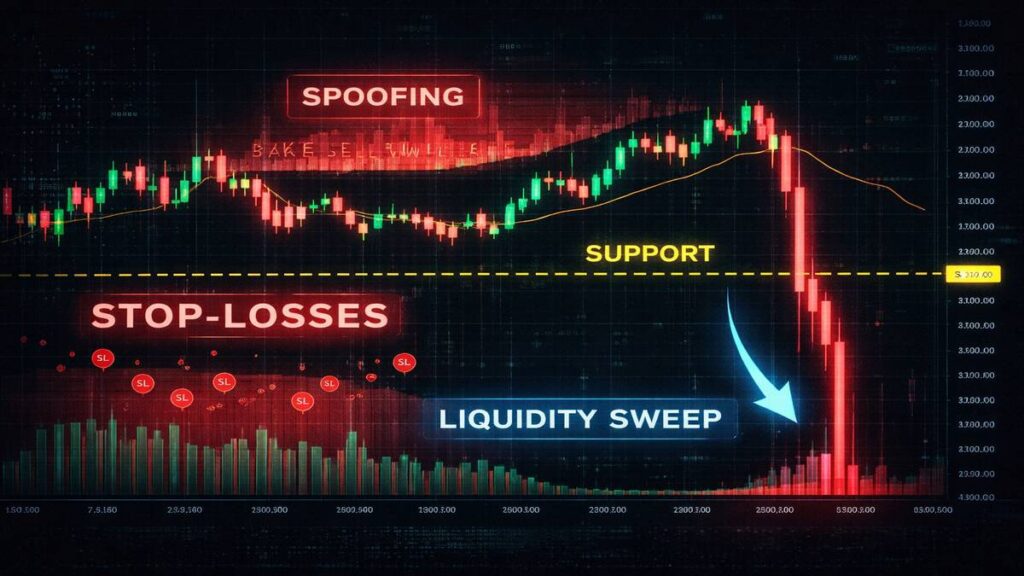
According to CoinDesk, Ethereum co-founder Vitalik Buterin accelerated his ETH sales this month as the asset’s price slumped ~37%, triggering notable market sentiment and volatility among traders. Even though the sales were announced and the amount was relatively small compared to his total holdings, the timing was bad. In early February, the crypto fear and greed index hit a very low point, even lower than during the FTX collapse. ETH’s price had dropped significantly from its January high, and it was underperforming Bitcoin.
This founder selling into extreme fear, even with good intentions, acted like a spark on dry tinder. It contributed to a massive wave of liquidations. On February 1st, over $2.5 billion in crypto positions were liquidated in 24 hours, with Ethereum seeing over $1.15 billion wiped out. A second wave hit a few days later, with another $1.45 billion liquidated.
These liquidations often happen because of leverage. When prices drop even a little, leveraged positions can be automatically closed, pushing prices down further. This creates a cycle that can amplify losses, especially when market sentiment is already very negative.
While Vitalik Sold, the Ethereum Foundation Staked 70,000 ETH
It’s crucial to understand that Vitalik’s personal sales are separate from the Ethereum Foundation’s actions. On February 24th, the same day some of the selling occurred, the Ethereum Foundation announced it was staking approximately 70,000 ETH. The rewards from this staking will go back to the foundation to fund research and development. Staking means the ETH is locked up and removed from circulation, which is the opposite of selling and signals confidence in the network’s proof-of-stake system.
So, while Vitalik is selling from his personal wallet to fund specific projects, the foundation is actively staking its ETH. These are different actions with different goals.
Ethereum’s Bigger Problem: L2 Fee Revenue Collapsed from $130M to $10M in One Year
Beyond the immediate impact of Vitalik’s sales, Ethereum faces a bigger, structural issue. The Dencun upgrade in March 2024 introduced EIP-4844, which significantly reduced the cost for Layer 2 (L2) networks to post data to the Ethereum mainnet. This was meant to scale Ethereum by making L2s cheaper.
It worked – L2 usage exploded. But the side effect was a massive drop in the fees L2s pay to the Ethereum mainnet. In 2024, L2s paid about $130 million in fees to Ethereum. In 2025, this dropped to just $10 million. This means L2 operators are keeping much more revenue, while the Ethereum mainnet is earning far less.
This has impacted the “ultrasound money” narrative. The idea was that ETH would become deflationary because transaction fees would burn more ETH than was being issued. But with mainnet fees now very low, the burn rate has also dropped, making ETH slightly inflationary.

The ETH/BTC Ratio Is at a Multi-Year Low — And ETF Investors Are Deep in the Red
This situation is reflected in the ETH/BTC ratio, which shows how ETH is performing against Bitcoin. This ratio is currently at a multi-year low. ETH has been underperforming BTC for a long time, a trend that has only worsened recently.
This underperformance is concerning, especially for institutional investors. The spot Ethereum ETFs, like BlackRock’s, have seen significant outflows and are holding assets at an average cost much higher than the current price. This means many ETF investors are sitting on large unrealized losses. For example, Bitwise’s Ethereum ETF reportedly has billions in paper losses.
Should US Traders Sell, Hold, or Buy More ETH Right Now? (Honest Answer)
To be clear, Vitalik Buterin is not “dumping” ETH in the sense of abandoning the project or enriching himself. His sales are publicly announced and directed towards specific development goals. He still holds a massive amount of ETH.
However, the gap between his communication of selling over “a few years” and the actual pace of sales within weeks is a valid point of concern, especially when the market is already in a state of extreme fear. The optics of any founder selling into such a negative environment, regardless of intent, can have a significant psychological impact.
Adding to this, Ethereum’s structural issue with L2 fee capture and the resulting impact on the ETH/BTC ratio and the “ultrasound money” narrative are real challenges. The substantial unrealized losses in ETH ETFs also paint a grim picture for many investors.
While Ethereum’s technical foundation remains strong, and future upgrades like Dencun aim to improve the mainnet’s activity, the current market environment and these structural issues raise questions about the short-to-medium term recovery for investors who bought in at higher prices or used leverage.
The core question now isn’t whether Ethereum will survive, but whether those who believed the “few years” timeline and invested heavily will have the capital left to participate when a recovery eventually happens.
Frequently Asked Questions
Q: Is Vitalik Buterin dumping ETH?
Vitalik is not dumping ETH. He publicly announced selling approximately 16,384 ETH to fund open-source projects. However, on-chain data shows he sold roughly 10,800 ETH in under 30 days — significantly faster than the “few years” timeline he communicated. He still holds the vast majority of his ETH.
Q: Should US investors worry about Vitalik selling Ethereum?
The sales themselves are less than 4% of his total holdings. The bigger concern is the timing — Vitalik sold during peak market fear — combined with Ethereum’s structural challenge of L2 fee revenue collapsing from $130M to $10M year-over-year.
Q: Why is ETH price dropping in 2026?
Multiple factors are converging — Vitalik’s accelerated ETH sales during market fear, collapsing Layer 2 fee revenue reducing ETH’s burn rate, the ETH/BTC ratio at multi-year lows, and large unrealized losses held by spot Ethereum ETF investors.
Q: What did the Ethereum Foundation do while Vitalik was selling?
On February 24, 2026 — the same day some of Vitalik’s sales occurred — the Ethereum Foundation staked approximately 70,000 ETH. Staking locks ETH and removes it from circulation, which is the opposite of selling and signals long-term confidence in the network.