Ethereum’s Unstoppable Comeback: Why DEX Volume Parity Signals Institutional Trust over Meme Coin Hype
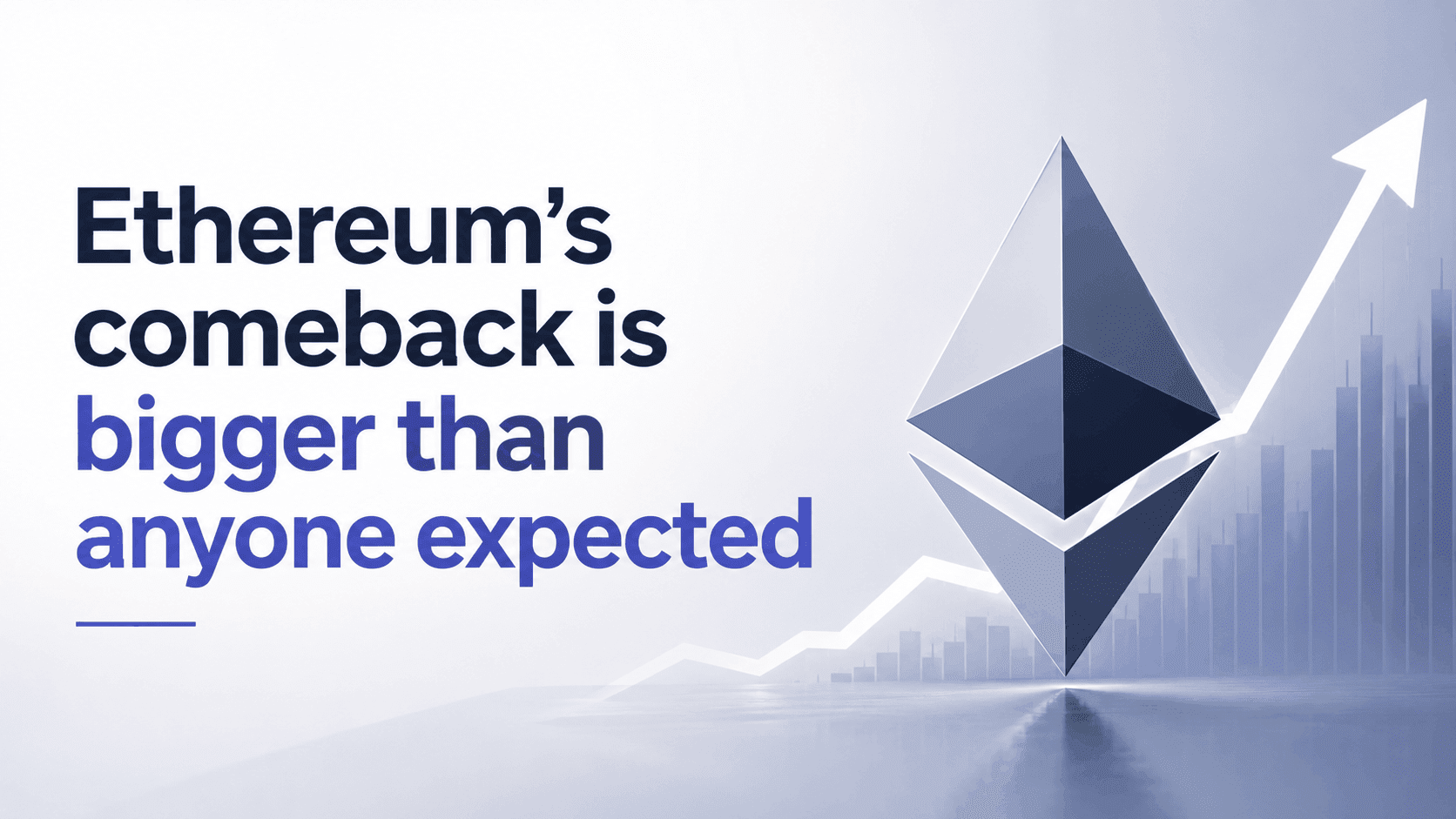
Nobody predicted Ethereum’s comeback would look like this. After a brutal 2023 correction that shook investor confidence to its core, ETH has roared back with a force that is rewriting every price model on the table. For years, people have treated Ethereum like a joke. The common complaint is that it is too slow and costs too much to use. Critics pointed to Solana as the better choice because it is faster, cheaper, and easier for the average person. On paper, it looked like Ethereum was losing the war for the future of finance.
The numbers in January 2024 told a scary story for ETH holders. Ethereum DEXes processed about $53 billion. Meanwhile, Solana was crushing it with $116 billion in volume. That meant Solana was handling 218% of the volume Ethereum saw. It felt like Solana was leaving the old giant in the dust.
But the tide has turned. Stability is now winning over hype. While Solana had a massive spike, Ethereum has shown it can hold its ground when the craze dies down. This shift suggests that the “Ethereum is dead” talk was premature.
The Great Volume Correction: Solana’s Crash vs. Ethereum’s Stability
By April 2024, the gap between the two chains closed fast. Solana’s DEX volume plummeted from its $116 billion peak down to just $43 billion. That is a massive 63% drop in a few short months. It was a sudden crash that caught many by surprise.
According to data tracked across major decentralised exchanges, Ethereum reclaimed its DEX volume lead over Solana for the first time since April 2025, driven by a wave of institutional inflows and spot ETF activity — while Solana’s trading volumes fell sharply following the collapse of the TRUMP memecoin cycle.
Ethereum had a much softer landing. Its volume slipped from $53 billion in January to $46 billion in April. That is only a 13% dip. By the end of April, Ethereum actually had higher DEX volumes than Solana. This level of dominance hadn’t been seen since August of the previous year.
This parity happens because of how people use these chains. Solana’s growth was tied to retail trends that move fast and vanish faster. Ethereum’s activity is built on a different foundation. When the hype fades, the core users stay.
Solana’s Meme Coin Sugar Rush: Analyzing the Speculative Peak
The huge numbers on Solana weren’t from real economic growth. It was a sugar rush caused by meme coins. Platforms like pump.fun allowed anyone to mint thousands of tokens every day. This created a casino environment where people traded tokens with no real use.
The data from Dune Analytics shows how risky this was. Around 18.7 million tokens launched on pump.fun. Less than 1% of those ever reached a $50,000 market cap. Most of these tokens went to zero almost instantly.
As the meme coin cycle ended, the rest of the network felt the pain. Look at these metrics:
- Active wallets dropped from 8.7 million in October to 1.9 million.
- Daily app revenue crashed from $85 million in January 2025 to under $2 million.
- Total Value Locked (TVL) fell from $13 billion in September to $6 million.
Solana is still a great piece of tech. It runs fast and handles a lot of data. But its growth was driven by retail gambling, not long-term building.
Ethereum’s Superpower: Embracing the “Boring” Foundation of Institutional Trust
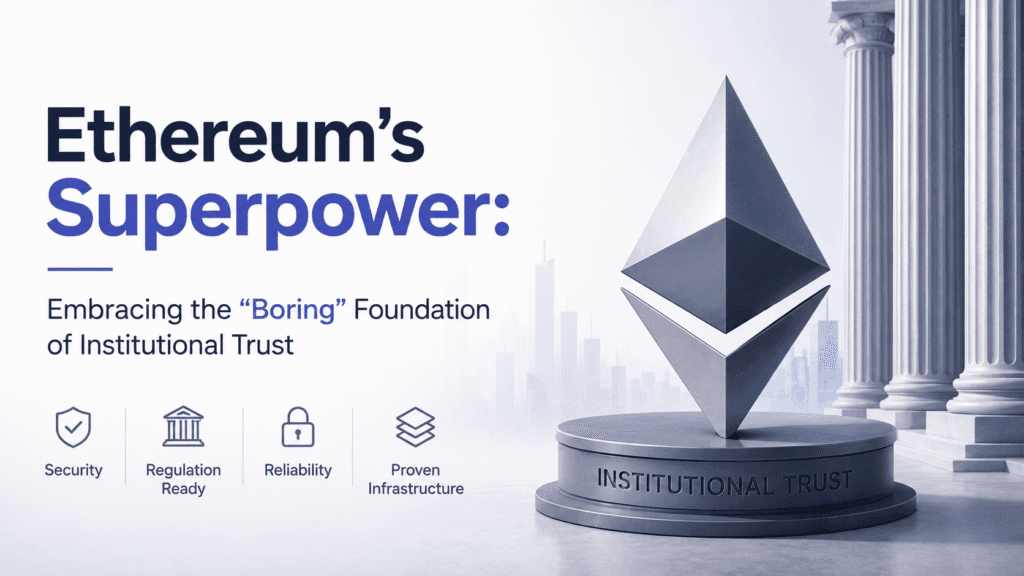
While Solana was the place for 100x moonshots, Ethereum became the place for serious money. Institutions don’t care about viral memes. They care about security and deep liquidity. They are happy to pay higher fees if it means their billions of dollars are safe.
Ethereum dominates the sectors that actually matter for long-term finance. Consider these mainnet statistics:
- DeFi: 52% of the total DeFi space lives here, totalling $44 billion.
- Real-World Assets (RWAs): ETH holds a 55% market share, worth about $19 billion.
- Stablecoins: Over 50% of all stablecoins, about $164 billion, settle on Ethereum.
Even the ETF market shows this trust. Ethereum-based ETFs have $16.6 billion in assets under management. Compare that to multi-asset ETFs, which have less than $5 billion.
Large funds choose Ethereum because it is a trusted settlement layer. They need a reliable architecture that won’t vanish when a trend changes. To a billionaire, “boring” is a feature, not a bug.
The Unsexy Evolution: Ethereum’s Relentless Infrastructure Upgrades
Ethereum doesn’t chase hype. It spends its time on hard forks to fix its core tech. A hard fork is just a way to upgrade the consensus and execution layers at the same time. These updates make the network stronger without needing to restart from scratch.
Several key milestones have helped this growth:
- The Merge (Sept 2022): This moved ETH from proof-of-work to proof-of-stake. It was a massive win for computer science and cut energy use.
- Dencun (March 2024): This introduced “blobs” through EIP-4844. It made Layer 2 solutions like Arbitrum and Optimism much cheaper for users.
- Pectra (May 2024): This update improved how validators work and added account abstraction. Now, wallets can act like smart contracts, allowing for gasless trades.
The roadmap for the next few years is just as focused. The upcoming Glamsterdam upgrade will bring parallelization. This means the network can process many transactions at once instead of one by one.
Looking further out, the Hegoda upgrade in 2026 will focus on statelessness. Nodes won’t have to store the entire history of the Blockchain. This will cut down on congestion and lower fees even more.
Final Thoughts: Unmatched Staying Power and the Settlement Layer Advantage
Ethereum has been through it all. It survived the 2017 ICO bust, the gas fee crisis, and the fade of the Merge hype. Every few years, someone writes its obituary. Yet, it only seems to get stronger.
Think of the difference between a casino and a stock exchange. Solana, BSC, and Tron often act like digital casinos. They are fast, cheap, and full of speculators. But when the party ends, the money moves back to the settlement layer.
Ethereum is like the New York Stock Exchange or the SWIFT system. It isn’t exciting. It doesn’t “melt faces” with short-term price spikes. But it is the backbone that the rest of the industry relies on.
RWAs, stablecoins, and institutional treasuries all lead back to Ethereum. While other chains fight for the spotlight, ETH is building the rails for global finance. Its staying power is its greatest asset. You can bet on a new fast chain, but betting against the most trusted layer in crypto is a risky move.
FAQ
Why is Ethereum making a comeback in 2025?
A: Ethereum soared nearly 100% from its early April 2025 bottom, driven by the Pectra upgrade, growing stablecoin usage, Layer 2 institutionalization, and a large ETH short unwind
Q: What is the Ethereum Pectra upgrade and why does it matter?
A: Pectra, launched in May 2025, is Ethereum’s largest-ever upgrade, combining two protocol layers into one update with 11 Ethereum Improvement Proposals. It lowered gas fees, improved transaction speeds, and made staking easier for everyday and institutional users
Q: Are institutions buying Ethereum in 2025?
Yes. In Q3 2025, Ethereum ETFs pulled in $2.4 billion in net inflows over six days — far outpacing Bitcoin ETFs’ $827 million in the same period. By August 2025, corporate treasuries and ETFs collectively held over 10 million ETH
Q: Will Ethereum reach a new all-time high?
A: Ethereum hit a 2025 all-time high of $4,953 in August. With record ETF inflows, rising corporate adoption, and reduced liquid supply from staking, analysts consider a new all-time high plausible, with some targeting $10,000 long-term
Q: Is Ethereum still a good investment for US and Canadian investors?
US spot Ethereum ETFs have made access straightforward, over 35 million ETH is staked — locking up 30% of supply — and $143 billion in stablecoins run on its network, strengthening its long-term fundamentals. As always, crypto carries risk; do your own research before investing.