Slippage in crypto is silently eating into your trading profits — sometimes by 1%, 3%, or even 5% on a single trade.
You think you’re buying Bitcoin at $100,000, but the order fills at $102,000. That extra $2,000? That’s slippage in crypto working against you. Whether you’re trading on Binance, Uniswap, Bybit, or any other platform, slippage is one of the most common (and expensive) hidden costs in crypto.
The good news? Once you understand exactly what it is, why it happens, and how to control it, you can dramatically reduce or even eliminate most negative slippage.
In this complete 2026 guide, you’ll discover:
- What slippage in crypto really means (with simple formula + real examples)
- Positive vs negative slippage
- Why it hurts crypto traders more than stock traders
- 7 proven strategies that actually work on both CEX and DEX
- Real trader case studies and a quick “Slippage Health Check” checklist
Let’s protect your profits starting today.
To combine better execution with disciplined exits, explore our in-depth Stop Loss Strategy guide for crypto traders to strengthen your overall risk management framework.
Key Takeaways
- Slippage in crypto is the difference between the price you expect when placing an order and the actual executed price.
- It can be negative (you pay more or receive less) or positive (you get a better price than expected).
- Negative slippage typically costs traders 1% to 5% per trade, especially on DEXes or during high volatility.
- The main causes are market volatility, low liquidity, large order size, and network congestion.
- You can significantly reduce slippage by using limit orders, setting proper slippage tolerance, trading high-liquidity pairs, and splitting large orders.
- DEX trades (Uniswap, PancakeSwap, etc.) usually require a slippage tolerance between 0.5% and 2% depending on the token pair.
- Understanding and controlling slippage can save you hundreds or even thousands of dollars every month.
Understanding Slippage in Crypto Trading
What Is Slippage in Crypto?
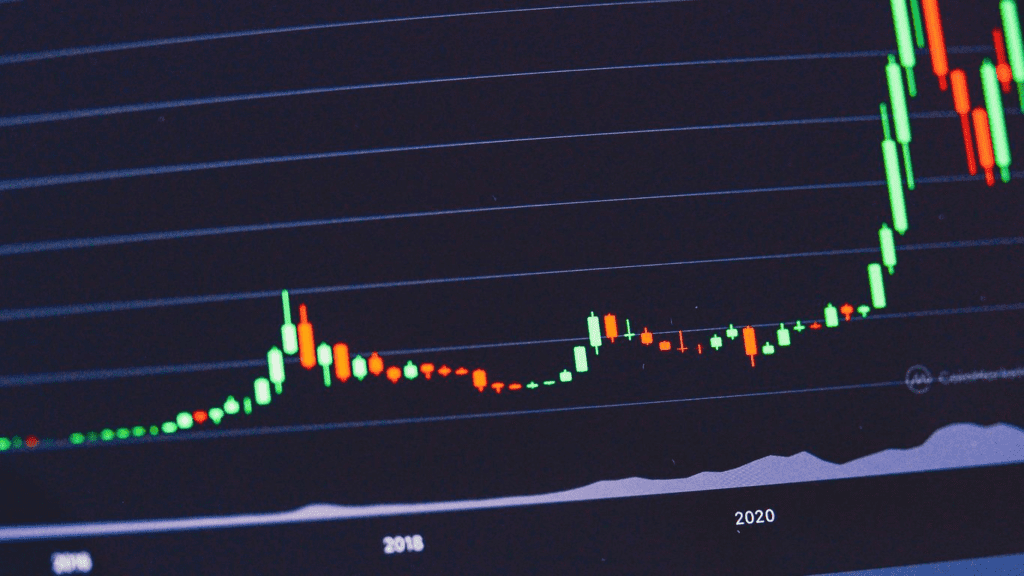
Slippage in crypto refers to the difference between the price you expect to execute a trade at and the actual price you receive, often caused by volatility, liquidity gaps, or order size. As explained by What Is Slippage in Crypto?, this price discrepancy is a common occurrence in fast-moving or illiquid markets where even small delays can significantly impact execution.
In simple terms: You click “Buy” thinking you’ll get a certain price, but by the time the transaction completes, the price has moved — and you end up paying more (or receiving less).
Simple Formula for Slippage:
Slippage (%) = ((Executed Price − Expected Price) / Expected Price) × 100
Real-Life Example:
You want to buy 1 BTC when the current market price shows $100,000. You place a market order. By the time it executes, the price has moved slightly and you actually pay $101,800.
→ You just experienced 1.8% negative slippage — costing you an extra $1,800 on this single trade.
Slippage can work both ways:
- Negative Slippage: You get a worse price than expected (most common).
- Positive Slippage: You get a better price than expected (nice surprise, but less frequent).
Most beginner traders only notice negative slippage when their profits suddenly look smaller than planned. Understanding both sides helps you become a sharper trader.
Positive vs Negative Slippage in Crypto
Not all slippage is bad. Slippage in crypto can work for you or against you. Most guides only talk about the negative side, but understanding both is crucial if you want to trade smarter.
Here’s a clear comparison:
| Type of Slippage | What Happens | Effect on you | How common | Example |
| Negative Slippage | You buy at a higher price or sell at a lower price than expected | Reduces your profit or increases your loss | Very Common | Buy BTC expecting $100,000 but pay $101,500 |
| Positive Slippage | You buy at a lower price or sell at a higher price than expected | Gives you extra profit | Less Common | Buy BTC expecting $100,000 but only pay $99,200 |
Real Example of Positive Slippage:
You place a market buy order for ETH at $3,500. While your transaction is being processed, a big seller dumps coins and the price drops slightly. Your order fills at $3,480.
→ You just gained 0.57% positive slippage — saving you extra money without doing anything special.
Why Positive Slippage Happens:
- Sudden increase in selling pressure
- Large buy orders getting filled from deeper liquidity
- DEX aggregators finding better routes
Pro Tip: While you cannot force positive slippage, using limit orders and trading during lower volatility periods increases your chances of benefiting from it.
Why Slippage Hits Crypto Traders Harder
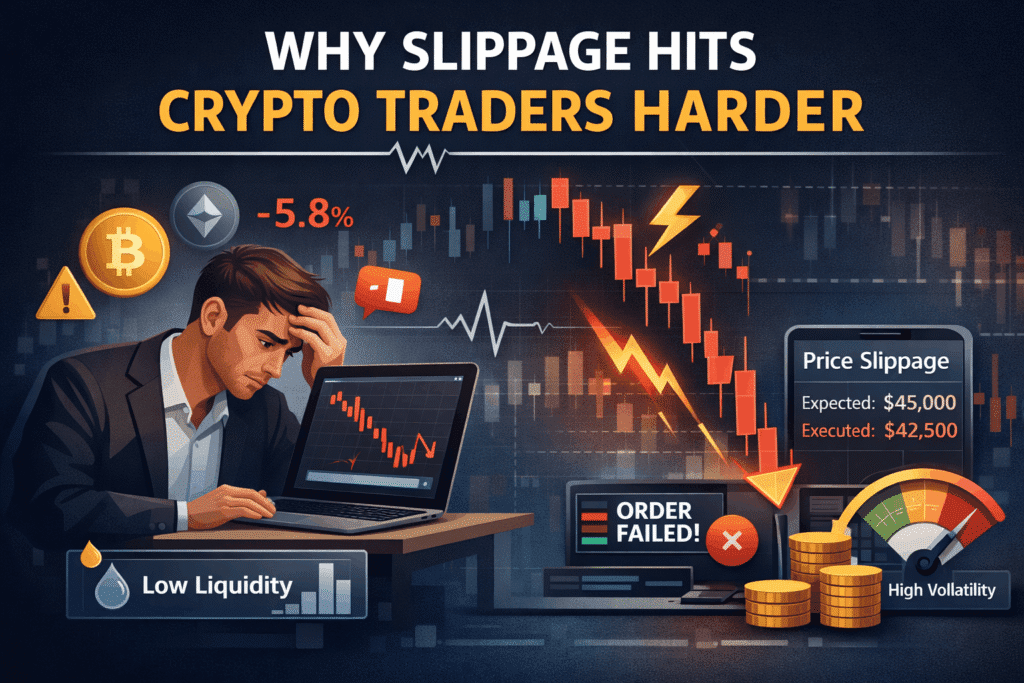
Slippage in crypto is much more painful than in traditional stock or forex markets. Crypto moves 24/7, with extreme volatility and often fragmented liquidity. A single tweet, news event, or whale move can swing prices 5–10% in minutes, creating perfect conditions for slippage. As explained by Investopedia in their guide on slippage in trading, price differences between expected and executed trades are more pronounced in fast-moving or low-liquidity environments—making it a critical factor for crypto traders to manage.
Here’s why crypto traders suffer more:
- 24/7 Non-Stop Market: No closing bell means volatility never really sleeps.
- High Volatility: Price swings are frequent and sharp.
- Lower Liquidity on Many Pairs: Especially altcoins and new tokens.
- Decentralized Nature: On DEXes, your own trade can move the price against you.
CEX vs DEX Slippage Comparison (2026)
| Factor | Centralized Exchange (CEX) | Decentralized Exchange (DEX) |
| How Slippage Occurs | Walking the order book | Automatic price impact via AMM (x × y = k) |
| Typical Slippage Amount | Lower (0.1% – 0.8% on major pairs) | Higher (0.5% – 5%+ depending on pool size) |
| Main Protection Method | Limit orders, iceberg orders | Slippage tolerance setting |
| Best for | Large orders, BTC, ETH, stablecoins | Altcoins, DeFi tokens, self-custody |
| Liquidity | Generally deeper and more stable | Can be very shallow on smaller tokens |
| Risk During High Volatility | Moderate | Very High |
Key Insight: On CEXes like Binance or Bybit, slippage is usually manageable with proper order types. On DEXes like Uniswap, PancakeSwap, or Raydium, even a medium-sized trade can cause significant price impact because you’re trading directly against a liquidity pool.
This is exactly why learning to manage slippage in crypto is essential — especially if you trade on decentralized platforms.
The 3 Main Causes of Slippage in Crypto
Understanding the root causes of slippage in crypto is the first step to controlling it. There are three primary reasons why slippage happens in the crypto market:
1. High Market Volatility Crypto prices can move extremely fast. Between the moment you click “Swap” or “Buy” and the time your transaction is confirmed on the Blockchain, the price may have already changed. This is especially common during major news events, FOMO rallies, or sudden market crashes.
2. Low Liquidity When there aren’t enough buyers or sellers (or tokens in a liquidity pool) at your desired price, your order has to “walk” through multiple price levels. Low-liquidity tokens and smaller altcoin pairs suffer the most from this.
3. Large Order Size If your trade is big compared to the available liquidity, it pushes the price against you. For example, trying to buy $50,000 worth of a mid-cap token in one go can easily cause 2–5% slippage on a DEX because your order significantly shifts the pool’s balance.
Bonus Cause (Common in 2026): Network Congestion – During peak times on Ethereum or Solana, transactions take longer to confirm, giving the price more time to move and increasing slippage risk.
Quick Tip: Before placing any trade, always check the 24-hour trading volume and order book depth (on CEX) or pool size (on DEX). If your order size is more than 1–2% of the 24h volume, expect higher slippage.
Wrapping Up: Slippage in Crypto
So, slippage in crypto trading is basically when the price you get for a trade isn’t quite what you expected when you placed the order. It happens because the crypto market moves so fast, and sometimes there aren’t enough buyers or sellers at that exact moment, or the network gets busy. While you can’t always avoid it completely, understanding why it happens and knowing how to calculate it is a big help. Using tools like limit orders or setting your slippage tolerance can really cut down on those unexpected price differences. Just remember, slippage is just one part of trading, so keep learning and stay aware of the market.


![Read more about the article Stop Loss vs Liquidation Crypto…[What Nobody Tells You]](https://cryptonomicshub.com/wp-content/uploads/2026/03/ChatGPT-Image-Mar-2-2026-10_49_52-AM-1-300x200.png)